The 5th International Symposium on Electrical, Electronics and Information Engineering (ISEEIE 2025), with the theme of “Intelligent Control of Energy, Wisdom-driven Connection to the Future”, was successfully held in Taizhou from November 21 to 23, 2025. Hosted by Taizhou University, the conference received full support from institutions including Taizhou Association for Science and Technology, Zhejiang Society for Electrical Engineering, Beijing University of Posts and Telecommunications, Zhengzhou University of Light Industry, Sanya Zongheng Energy Research Institute, Heilongjiang University, and CoreShare Academic Exchange Center. The conference has attracted more than 150 experts, scholars and industry elites from around the world, who gathered to conduct in-depth exchanges and discussions on cutting-edge innovations and future trends in the fields of electrical, electronics and information engineering.
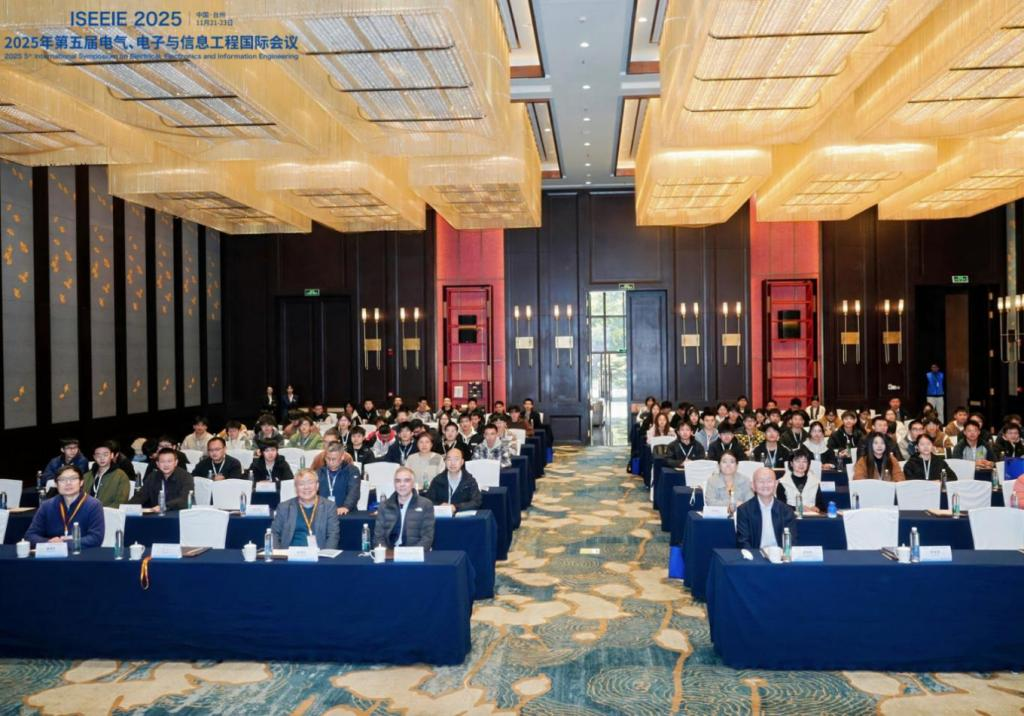
Group Photo of the conference
At the opening ceremony, Professor Han Deman, Vice President of Taizhou University, extended a warm welcome to all the distinguished guests attending the conference and elaborated on the close connection between the conference theme and the development vision of TU. Professor Han pointed out that the university is in a critical period of “pursuing Master’s degree programs, upgrading academic status, and striving for first-class excellence”, and is committed to cultivating high-quality application-oriented talents with “a dedication to the nation, the pioneering spirit, and solid professional competence”. By further emphasizing that the university is moving towards the goals of being upgraded to TU and securing doctoral degree programs, he hoped that the high-level international academic conference would pool global wisdom, boost discipline development, and better serve regional economic and social development as well as national strategic needs.
Yu Hongbiao, Vice Chairman of Taizhou Association for Science and Technology, congratulated the conference on its convening. Stressing the important role of high-level academic exchanges in promoting local technological innovation and industrial upgrading, he affirmed the pivotal role of TU in serving regional development. Yu stated that the Association would continue to support international academic activities as always, and work together to contribute to building Taizhou and Zhejiang Province into a highland of science, technology and talents.
Zheng Weimin, Secretary-General of Zhejiang Society for Electrical Engineering, highly commended the platform value from the industrial perspective. He pointed out that the in-depth integration of electrical, electronics and information engineering is profoundly transforming the technological paradigm and industrial form of the energy and power sector. Emphasizing that industry-university-research collaboration is the core driver for industrial progress, he hoped to conduct in-depth exchanges with the participating experts and scholars to contribute their wisdom to building a new-type power system and promoting the green and low-carbon transformation of energy.
The keynote speech session brought together top scholars from China, Denmark, Italy and other countries. Their reports systematically constructed an evolutionary framework for the future energy system from four key dimensions— “climate resilience, market mechanisms, end-user empowerment, and system architecture”, presenting in-depth collisions between cutting-edge theories and practical solutions.
Academician Xue Yusheng, in his report Power System Planning and Operation Control Under Meteorological Risks, deeply integrated climate physical laws with power systems, and pioneered the integrated “planning-operation” risk prevention theory to address extreme meteorological disasters, laying a solid foundation for building a highly resilient new-type power system.
Professor Wen Fushuan, in his report Correlation Analysis of Electricity Prices, Carbon Prices and Fossil Fuel Prices, revealed the complex linkage mechanisms among the energy market, carbon market and fossil fuel market, providing crucial theoretical support for the design of multi-market coordination strategies and policies under the “dual carbon” goals.
Professor Josep M. Guerrero, in his report Practical Considerations in the Implementation of Grid-Forming Converters, conducted an in-depth analysis of the key challenges in advancing core control technologies from theory to engineering applications, offering forward-looking and practical solutions for building a plug-and-play, autonomous and coordinated distributed energy system.
Professor Pierluigi Siano, in his online report Methods and Frameworks of IoT-Based Demand Response in Smart Grids, constructed a systematic framework for the aggregation and real-time regulation of massive heterogeneous end-user resources via the Internet of Things (IoT), providing an innovative approach to solving the structural challenges of flexible resources participating in grid interaction.
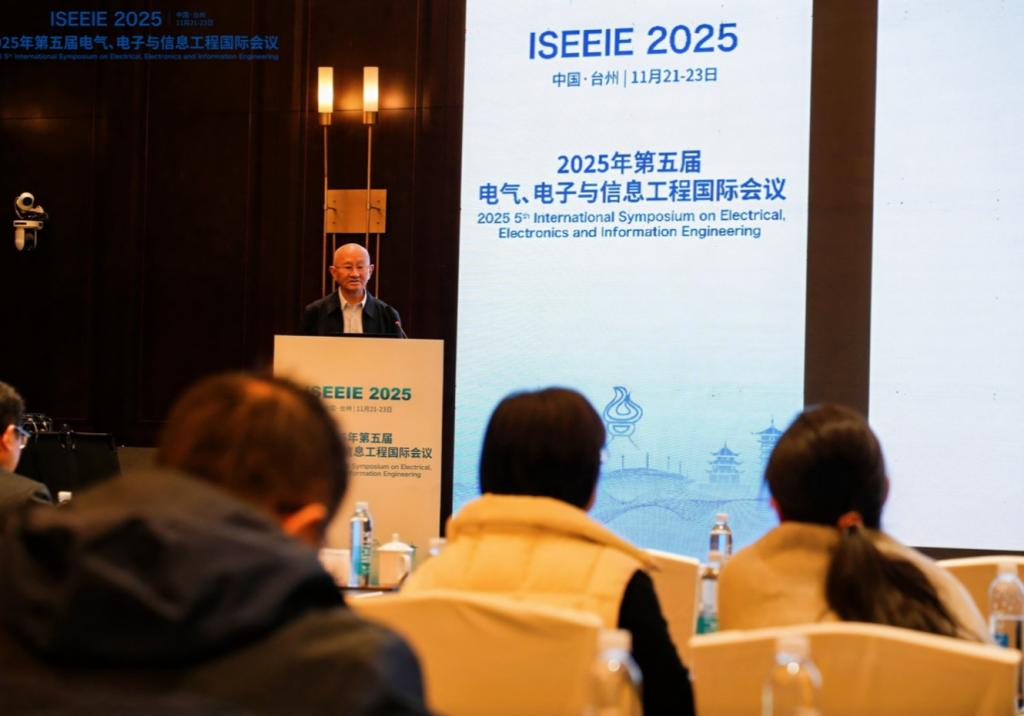
Academician Xue Yusheng delivering a report entitled Power System Planning and Operation Control Under Meteorological Risks
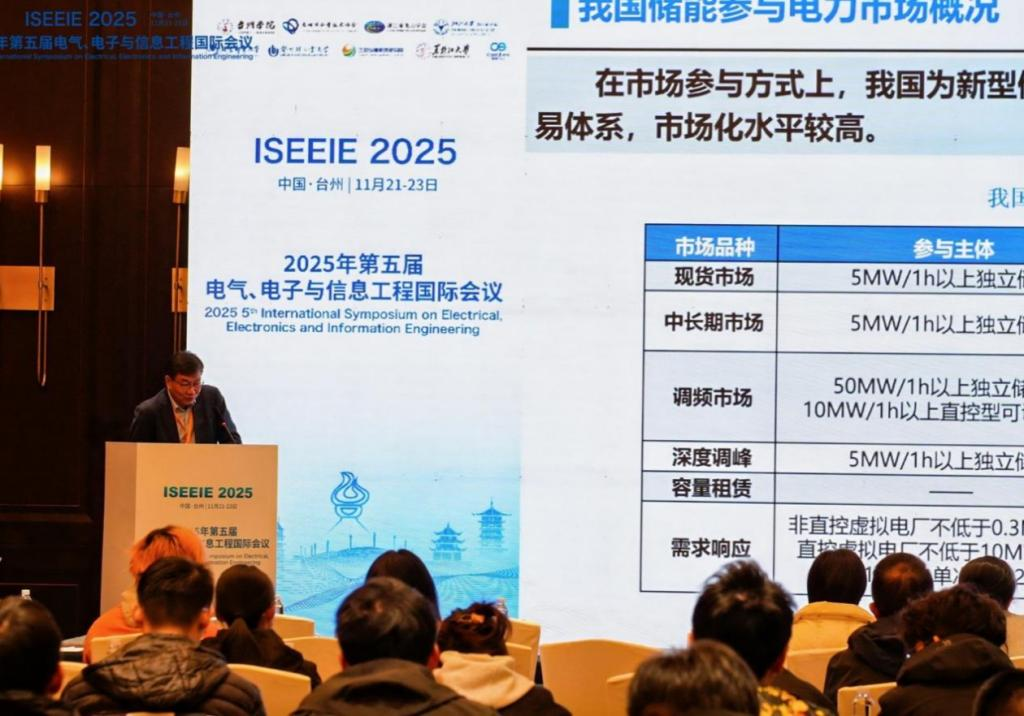
Professor Wen Fushuan delivering a report entitled Correlation Analysis of Electricity Prices, Carbon Prices and Fossil Fuel Prices
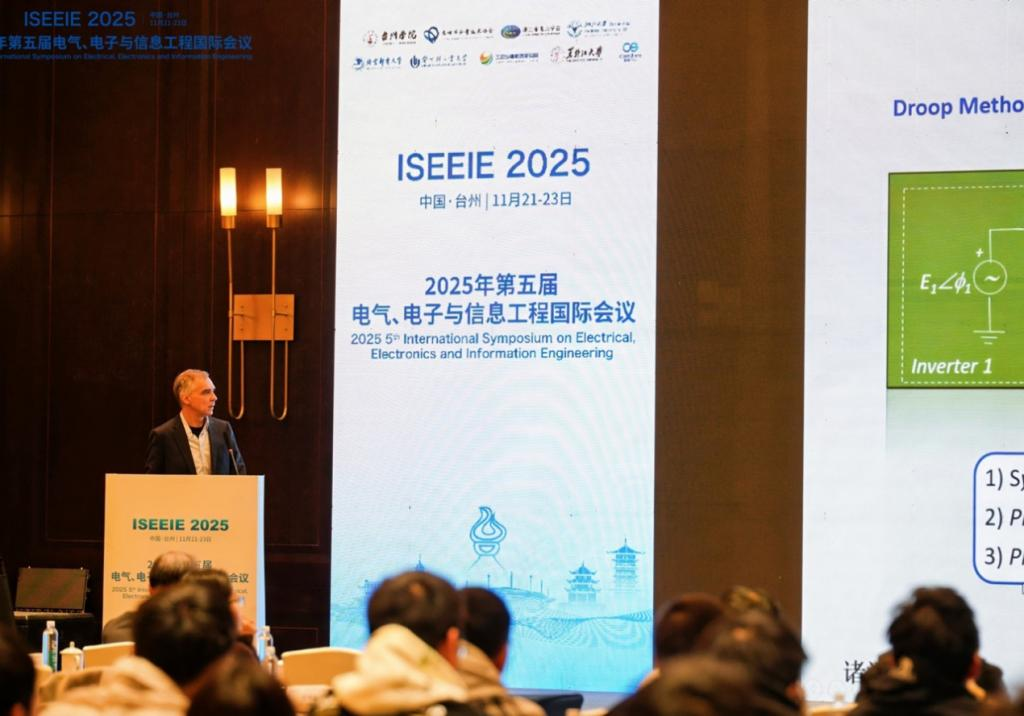
Professor Josep M. Guerrero delivering a report entitled Practical Considerations in the Implementation of Grid-Forming Converters
The speech session demonstrated that energy research has moved beyond discussions of macro trends to a new phase, which focuses on breakthroughs in core mechanisms and systematic construction. The research of the four scholars addressed key issues spanning from basic theories to engineering architectures at the intersections of cyber-physical-social systems, jointly promoting the evolution of energy systems toward a smarter, more resilient, and more cost-effective future.
The expert forum themed “Progress in AI + Smart Energy: Scenarios, Applications and Prospects” emerged as the highlight of the event. Chaired by Researcher Zhang Chunyu, a leading academic figure of Taizhou University, Chief Scientist of the Provincial Key Laboratory of Island Green Energy and Advanced Materials, and Zhejiang Specially Appointed Expert, the forum was honored to have Academician Xue Yusheng in attendance. It also brought together top experts from prestigious institutions and enterprises including Zhejiang University, Shandong University, South China University of Technology, North China Electric Power University, Shenzhen Power Supply Bureau, and Baima Lake Laboratory. The distinguished participants included Professor Wen Fushuan, Professor Ding Yi, Professor Zhao Haoran, Dr. Liu Zhou, Researcher Zhang Qianzhi, Professor Liu Zhaoxi, Dr. Hou Peng, and Professor Zhao Haisen.
Centering on the industry vision of “elevating AI technologies and applications in the energy sector to a new level by 2030”, the forum saw participating experts conduct in-depth discussions on AI theoretical innovations and industrial implementation paths in such key scenarios as hierarchical power grids, clean energy, electricity markets, and heterogeneous aggregates, from multiple dimensions as system defense, market design, and equipment control. Academician Xue, from the perspective of the overall security of power systems, elaborated on the core value and challenges of AI technologies in addressing meteorological risks and enhancing system resilience, laying a solid academic foundation for the forum. The discussion provided forward-looking ideas and systematic solutions for advancing the in-depth integration of AI + in the energy field.
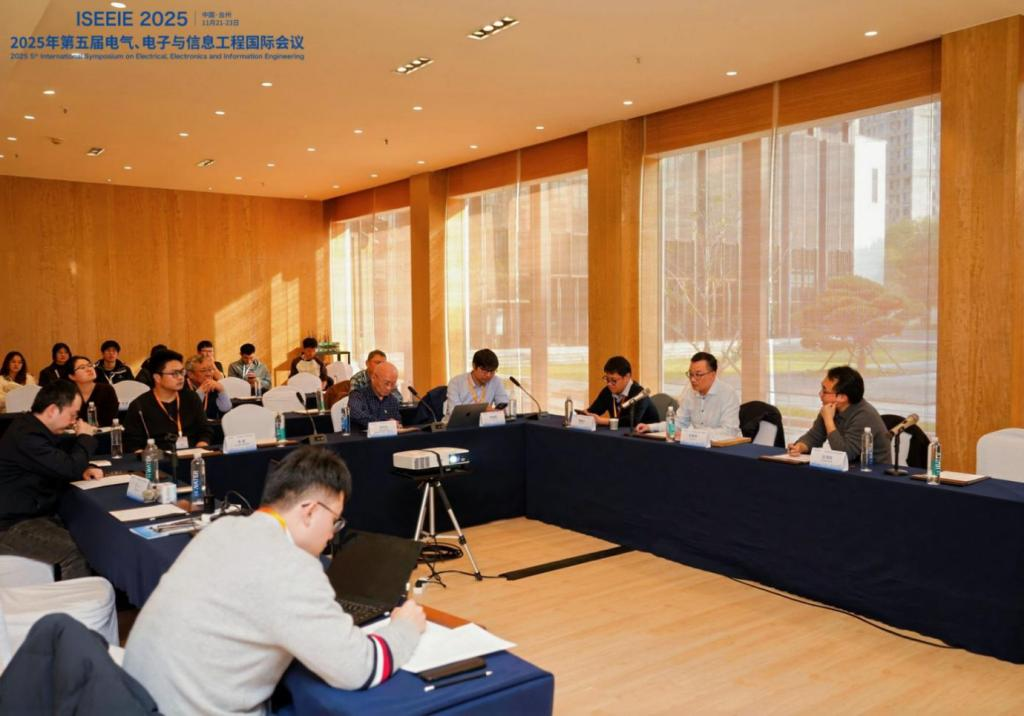
Expert Forum on “Progress in AI + Smart Energy: Scenarios, Applications and Prospects”
In addition to keynote speeches and thematic forums, the conference carefully designed ten special sub-forums covering a full range of hot topics such as smart grids, energy storage, semiconductor devices, artificial intelligence, 5G/6G communications, and quantum information. The sub-forums were initiated by a number of young and middle-aged scholars active in the front line, including Qin Boyu from Xi’an Jiaotong University, Yang Peng from Xi’an Polytechnic University, Zhang Yajian from Shanghai University, Wang Erfu from Heilongjiang University, and Zhang Hongxin from Beijing University of Posts and Telecommunications. They effectively promoted the precise connection and cooperation between academia and industry in specialized fields. Moreover, Professor Huang Xing from Northwestern Polytechnical University and Professor Ma Haifeng from Shandong University served as sub-forum chairs, providing core guarantees for the topic planning and academic quality of the sub-forums.
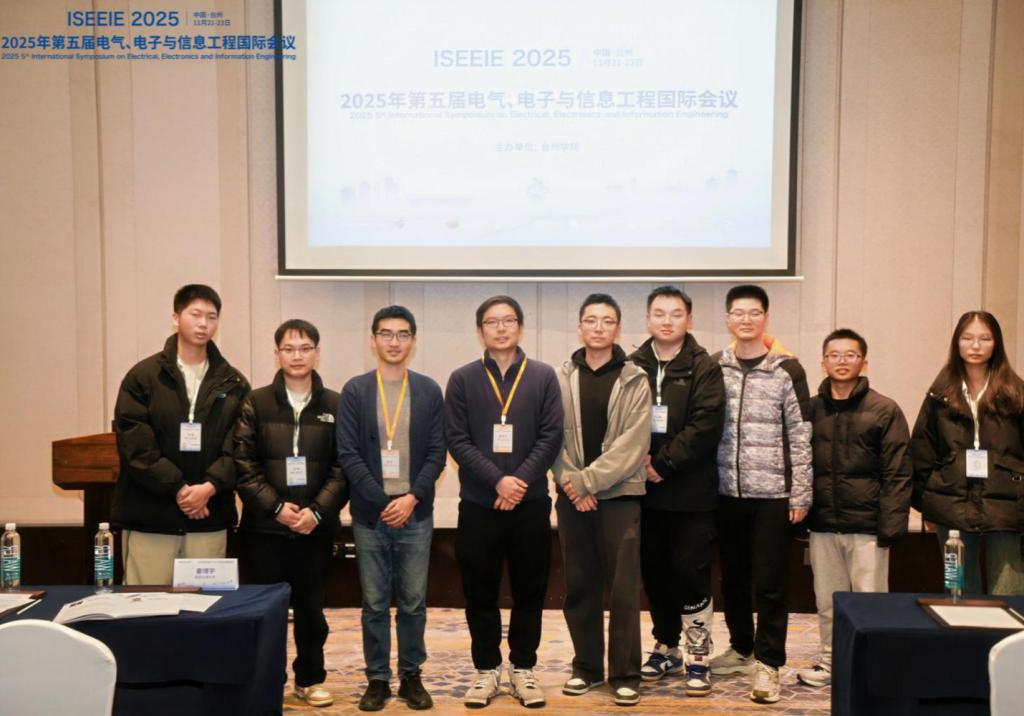
At the Sub-forum
Concurrently, the conference also successfully held a series of invited lectures, oral presentations, poster sessions, and an award ceremony. During the invited lecture session, Associate Professor Zhang Zhe from Xi’an Jiaotong University proposed a response-driven voltage stability assessment and control strategy to address the voltage stability challenge faced by the world’s most complex power grid. This not only provided an innovative solution for the safe operation of large-scale power grids, but also offered a valuable platform for young scholars from Taizhou University, Zhejiang University, Xi’an Jiaotong University and other institutions to present their research findings and broaden their international perspectives.
The ISEEIE conference series has been successfully held four times across Asia and Europe, evolving into an influential annual international academic exchange event in the field. The hosting in Taizhou, a major manufacturing hub, fully demonstrates the conference’s commitment to integrating theoretical innovation with industrial applications. Through high-level international exchanges and discussions, the conference has injected new impetus into the high-quality development of the electrical, electronics and information engineering industry in Zhejiang Province and even across China, while also contributing Chinese wisdom and solutions to global scientific and technological progress.
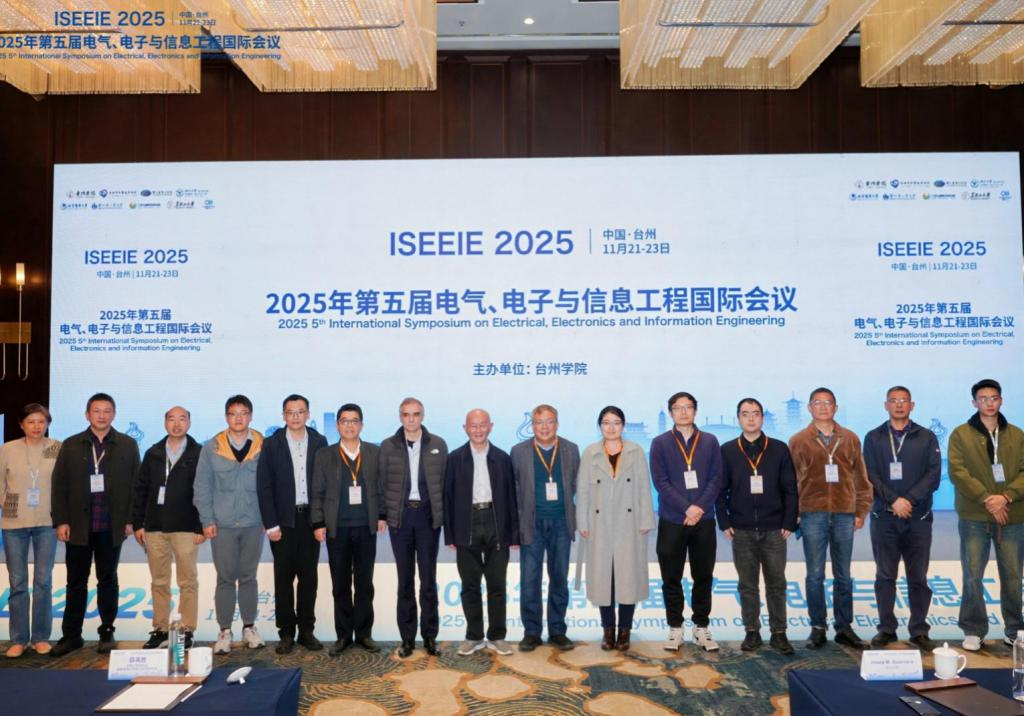
Group Photo of some committee members
The smooth convening was attributable to the full collaboration of various committees. The International Advisory Committee of the conference had such international scholars as Professor Chung-Li Tseng from the University of New South Wales, Australia. Professor Wen Fushuan from Zhejiang University served as the Chair of the conference to steer the academic direction, while Researcher Zhang Chunyu from Taizhou University acted as the Executive Chair to oversee the specific planning and execution of the conference. The Co-Chairs of the conference included Professor Qi Donglian from Zhejiang University, Professor He Ping from Zhengzhou University of Light Industry, and Professor S. N. Singh from the Indian Institute of Technology. The Technical Program Committee and the Organizing Committee brought together many experts and scholars such as Professor Ahmed F. Zobaa from Brunel University London, UK, Researcher Deng Wei from the Institute of Electrical Engineering, Chinese Academy of Sciences, Professor Wang Ying from China Jiliang University, Professor Lou Yaolin from Zhejiang University of Water Resources and Electric Power, and Professor Liang Bomiao from Zhejiang University of Science and Technology. They provided core support for the academic planning and paper review of the conference. A number of faculty members and students from the College of Intelligent Manufacturing, TU participated in the relevant organizational work.