The First Zhejiang Province Offshore Drone Law Enforcement Skills Competition came to a successful conclusion in Taizhou amid pleasant weather conditions on November 20. As one of the core organizers, Taizhou University not only provided high-standard venues and logistical support but also leveraged its talent and technical expertise in the Unmanned Aerial Vehicle Systems Engineering program to ensure the smooth operation of the competition. This “feast of skills,” which brought together elites from the province’s maritime system, was not only a comprehensive assessment of offshore drone law enforcement capabilities but also a vivid example of the university serving local development with its disciplinary strength. The contribution injected momentum into Taizhou’s low-altitude economy, writing a new chapter in university–community collaboration and industry–academia integration.
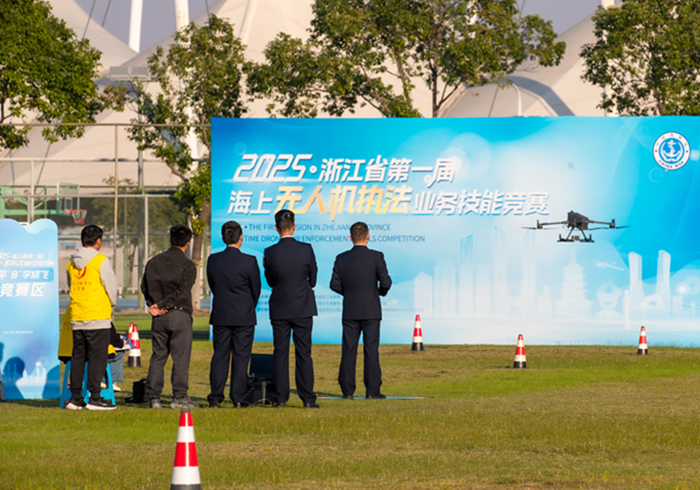
Competition venue at TU
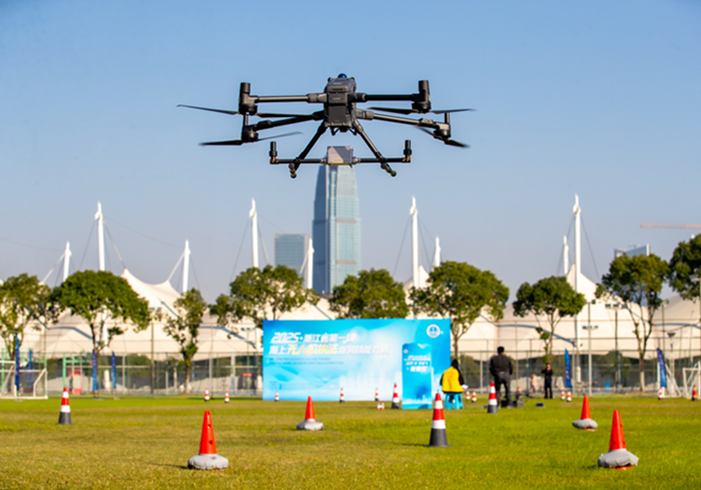
Competition venue at TU
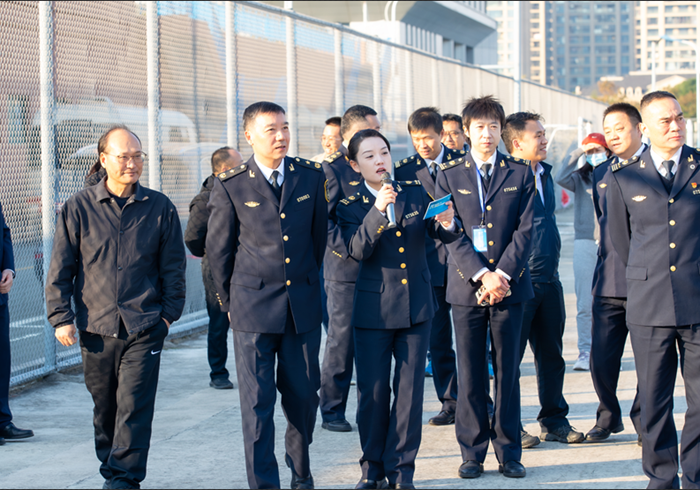
Wang Huayuan and delegation inspecting the Competition Venue
The competition was jointly hosted by the Zhejiang Maritime Safety Administration (ZJMSA) and the Zhejiang Federation of Trade Unions (ZJFTU), and co-organized by TU together with the Taizhou Maritime Safety Bureau, the Taizhou Federation of Trade Unions, and the Taizhou Transportation Bureau. It attracted 10 teams and 40 contestants from six maritime bureaus across Ningbo, Zhoushan, Wenzhou, Taizhou, Jiaxing, and Hangzhou. Vice Director of the ZJMSA Wang Huayuan and Inspector Xu Lindi of the Maritime Safety Bureau under the Ministry of Transport, accompanied by TU’s Vice President Han Deman, attended the event to watch the competition and cheer for the participants.
With the purpose of “promoting learning, training, and practical application through competition,” the event featured two core segments: offshore law enforcement scenario exercises and flight skill competitions, with the former conducted in waters near the Taizhou Port Navigation Wharf, simulating real maritime law enforcement tasks such as vessel inspection and navigation environment inspection, and the later held at the East Athletic Field of TU, covering three challenging events—horizontal figure-eight flight, obstacle flight, and beyond-visual-line-of-sight precision payload delivery. These events comprehensively assessed participants’ drone control accuracy, emergency response capabilities, and team coordination skills.
The closing and award ceremony was held at TU’s International Conference Hall, attended by team leaders and all participants from the maritime bureaus.
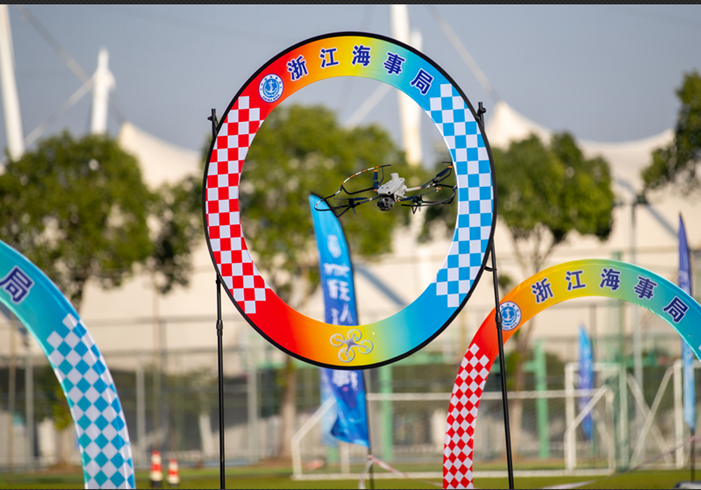
TU venue: figure-eight flight demonstration
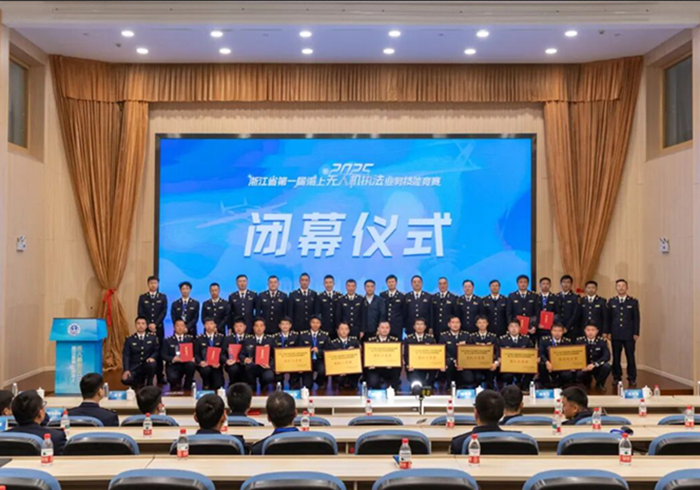
Award ceremony
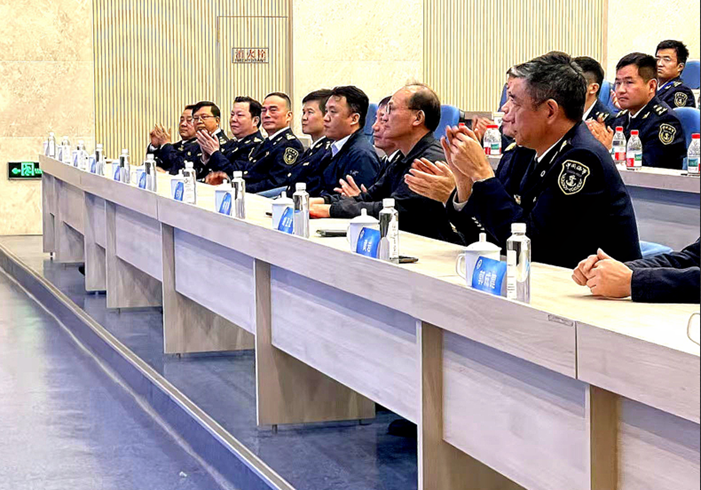
Award Presenters
TU is one of the first universities in Zhejiang Province to offer an undergraduate program in UAV Systems Engineering. Its School of Intelligent Manufacturing (Aerospace Engineering) provided solid support for the competition, serving as a key backbone for its smooth progress. Since its preparation in 2018 and official enrollment in 2019, the program has closely aligned with regional industry needs, focusing on two main tracks: drone design & manufacturing and industry applications of drones, establishing a classified cultivation model. It has built an integrated curriculum system combining theoretical instruction, laboratory training, and industry practice.
The school actively promotes university–enterprise collaboration, having established channels for cooperation and exchange with enterprises such as the Aerospace Department of Tsinghua University’s Yangtze Delta Region Institute, Aerospace CH UAV Co., Ltd, and Beihang Changying Company. It has further deepened collaboration with these enterprises, leveraging respective advantages in platform development and talent cultivation, enhancing the synergy of resources, promoting university–industry cooperation, and achieving mutual benefit and win-win outcomes.
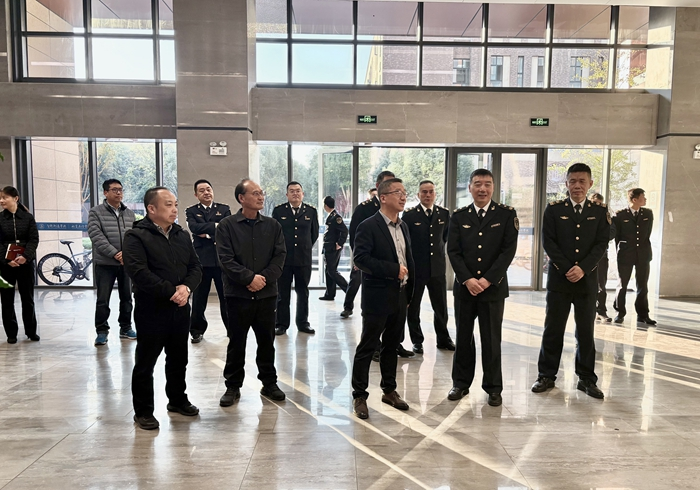
Wang Huayuan and delegation visiting the School of Intelligent Manufacturing

Wang Huayuan and delegation visiting drone laboratories
Behind the program’s strength is the university’s significant investment in practical training facilities. At present, the School of Intelligent Manufacturing (Aerospace Engineering) has established specialized laboratories, including a recirculating low-speed wind tunnel laboratory, a rotorcraft teaching laboratory, a fixed-wing teaching and training laboratory, and a drone operation training field. The school is equipped with more than 20 unmanned training aircraft of various types, such as the DJI M350 and Matrice 4T, as well as advanced equipment including CNC machining centers, metal 3D printing systems, and drone flight control simulation systems, with a total investment exceeding 10 million RMB. Among these facilities, the wind tunnel laboratory can simulate the aerodynamic performance of drones under different wind speeds, providing critical technical support for parameter tuning. The drone operation training field is closely aligned with the layout of the flight skills competition venue. Before the competition, many participating teams conducted adaptive training at this field, laying a solid foundation for their outstanding performance in the event.
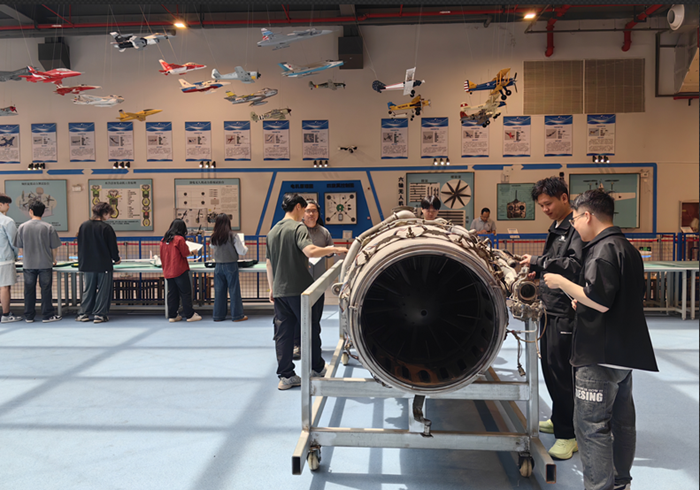
Drone laboratory, School of Intelligent Manufacturing, TU
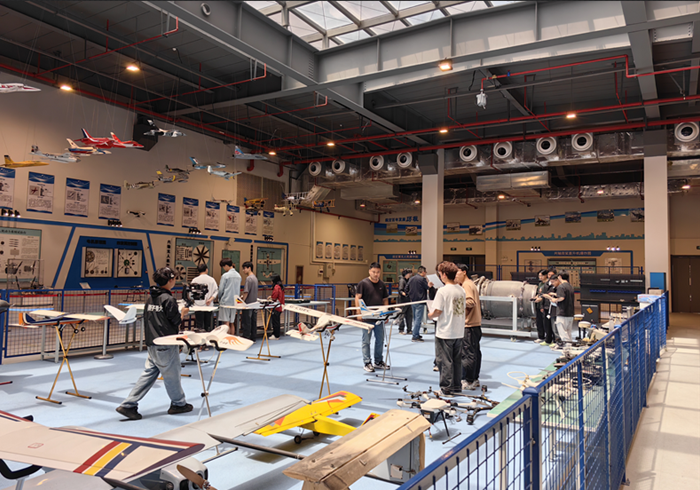
Drone laboratory, School of Intelligent Manufacturing, TU
From venue planning to equipment calibration, more than ten faculty members and students from the School of Intelligent Manufacturing participated throughout the competition, making the event a “touchstone” for testing teaching outcomes and aligning with industry needs. Prior to the competition, the school organized its teaching team to calibrate the layout of the figure-eight cones, the spacing of obstacle flight arches, and the placement of precision payload targets at the East Athletic Field according to the competition rules, ensuring full compliance with event standards. During the competition, the teaching team also served as technical advisors, assisting the judging panel in resolving technical issues such as drone parameter settings and flight data recording, thereby ensuring the fairness and integrity of the event through solid disciplinary expertise.
In addition, more than 20 graduate student volunteers selected by the school underwent specialized pre-competition training and were assigned tasks including showing directions, handling equipment, recording scores, and assisting with the award ceremony. Their efforts received high praise from both the other competition organizers and the participants.
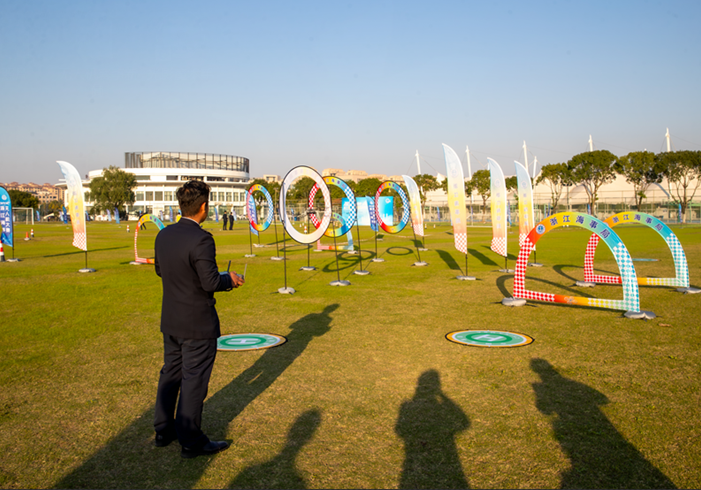
Figure-eight cones and obstacle arch setup at Taizhou University venue
The successful hosting of the competition epitomizes the university’s efforts to deepen university–community–enterprise collaboration and support the development of Taizhou’s low-altitude economy. In recent years, Taizhou has been vigorously advancing the construction of the UAV Aviation Town, actively expanding drone application scenarios in maritime law enforcement, emergency rescue, agricultural plant protection, logistics, and other fields. The university’s UAV Systems Engineering program has naturally become a bridge connecting higher education talent cultivation with local industrial needs.
The university has explored in-depth cooperation with the Taizhou Maritime Safety Bureau, signing a framework agreement on UAV-related collaboration and jointly establishing the “UAV Maritime Application Training Base,” aiming to cultivate UAV application talent for the maritime sector in Taizhou and across Zhejiang Province. The school has established an “industry-commissioned” talent cultivation model with local UAV-related enterprises, where companies help design the program curricula and send engineers to teach, while students participate in real-world projects through internships. Last year, the program’s first cohort of graduates achieved a 96% employment rate, with 30% joining leading enterprises in the industry, and some graduates have already become technical backbones in the field of UAV applications.
“The university has always adhered to the educational mission of ‘running a quality university and prospering a city.’ Hosting this competition not only reflects our commitment to supporting the modernization of maritime law enforcement but also provides an important opportunity to deepen university–community collaboration and to align disciplinary practice with industry needs,” said Han Deman. He stated that the university will take this competition as a starting point to further optimize the talent cultivation plan of the UAV Systems Engineering program and increase investment in its development. The university will continue to deepen cooperation with maritime authorities and related industry enterprises, tackling key technologies such as remote UAV communication, swarm control, and maritime data integration. It will explore more mutually beneficial pathways in talent cultivation, technological research, and technology transfer and practical application of research outcomes, providing solid talent and intellectual support for the high-quality development of Taizhou’s low-altitude economy.
In this competition, Team One of the Taizhou Maritime Safety Bureau won the team first prize; Pan Juntao from the same team won the individual first prize; and the Taizhou Maritime Safety Bureau was awarded the Outstanding Organization Award.
The successful conclusion of the competition not only showcased the outstanding drone law enforcement capabilities of Zhejiang’s maritime system but also highlighted the university’s unique value in serving local development. Looking ahead, the university will continue to use its disciplinary expertise as a bridge to deepen cooperation with the maritime system and local enterprises, enabling UAV technology to serve as the “intelligent wings” that empower modern maritime supervision and promote the development of the low-altitude economy, thereby contributing more of the university’s strength to the high-quality development of Zhejiang’s marine economy.