Taizhou University held the 2nd session of the 9th Faculty Congress and the 13th Teachers Union Congress on December 18. Members of the university’s Party and administrative leadership, along with specially invited representatives, were seated on the rostrum. Zhu Jian, Secretary of Taizhou University Party Committee, delivered a speech. Le Chuanyong, President and Deputy Secretary of the Party Committee, presented the university work report. Ding Yizhi, Deputy Secretary of the Party Committee, presided over the meeting.
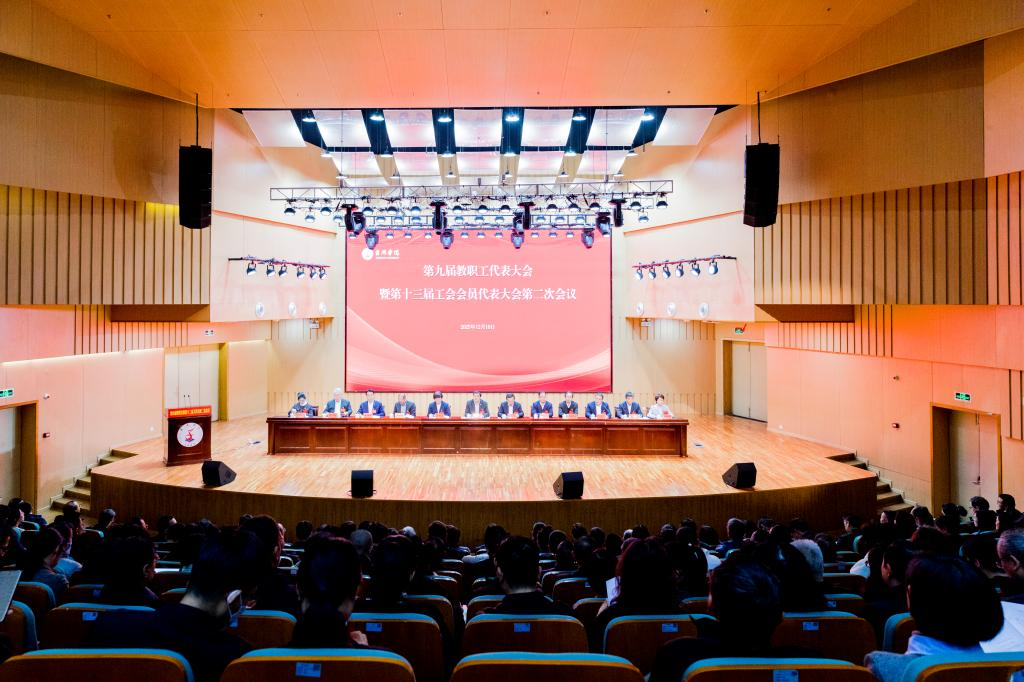
The 2nd Session of the 9th Faculty Congress and the 13th Teachers Union Congress
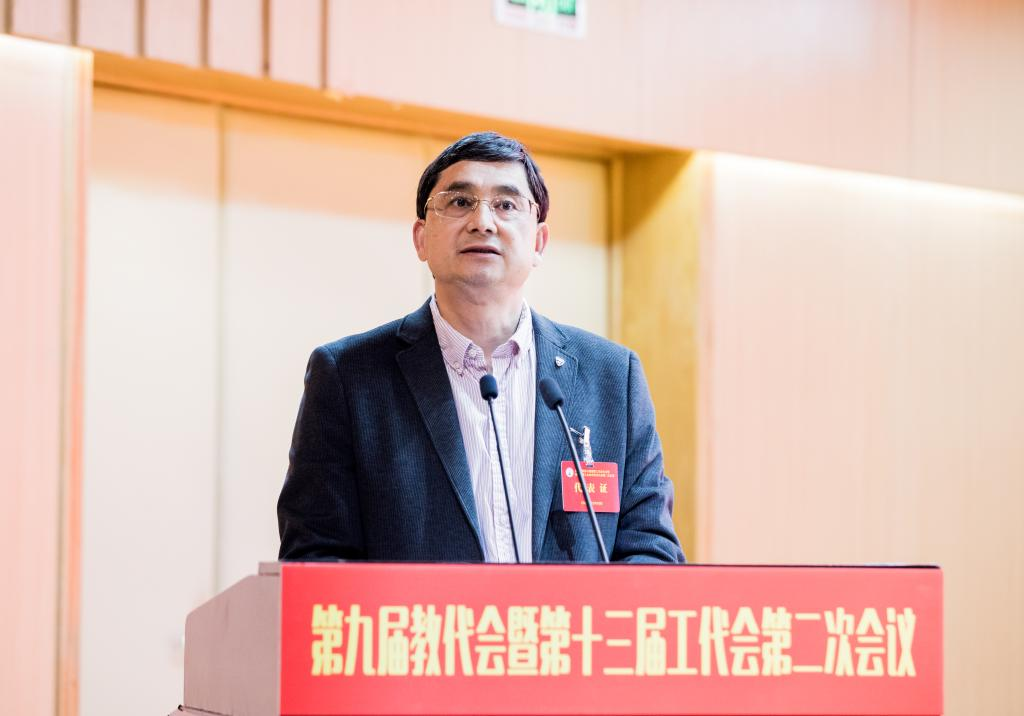
Speech by Zhu Jian, Secretary of Taizhou University Party Committee
On behalf of the University Party Committee, Zhu Jian expressed his gratitude to all delegates and to the staff whose efforts ensured the smooth convening of the congress. He noted that the meeting was held at a key moment, as the university is studying and implementing the guiding principles of the Fourth Plenary Session of the 20th CPC Central Committee, steadily advancing the planning and layout of the “15th Five-Year Plan,” and making every effort to achieve the strategic goal of “upgrading to a university and applying for doctoral programs.”
To implement the congress’s resolutions and turn collective wisdom into a strong driving force for development, Zhu Jian called for action in three areas. First, the university should build consensus, strengthen confidence, and grasp the direction of development from a higher vantage point. It must remain firmly confident that “the university will become better,” cherish the hard-won momentum of progress, and translate confidence into concrete actions. At the same time, it should seize strategic opportunities during the “15th Five-Year Plan” period, unify thinking, focus on key indicators, tackle difficult problems, and break through bottlenecks that constrain development.
Second, the university should focus on priorities, overcome challenges, and promote progress through more concrete measures. Zhu urged deeper comprehensive reform and faster establishment of a scientifically classified and clearly oriented professional title evaluation system. He also emphasized improving the university’s service to local development by innovating service models, optimizing collaborative education platforms, and providing stronger talent and technological support for the growth of new quality productive forces in the region. In addition, he called for higher governance efficiency by further improving channels for faculty and staff to participate in democratic governance and supervision, and by carefully studying and adopting the suggestions raised at the congress, turning them into actionable plans and development initiatives.
Third, Zhu said the university must uphold a people-centered approach, pool collective strength, and demonstrate greater responsibility in advancing its mission. Trade unions at all levels should stay focused on the university’s central tasks and enhance services, continue implementing the “Ten Major Livelihood Projects,” support the growth of young teachers, enrich campus cultural life, and aid those in need—working to build a warmer and more vibrant “home for faculty and staff.” He called on all faculty and staff to remain dedicated to their work, unite and strive together, and take “building the most student-caring university” as a shared goal, becoming active supporters, participants, and drivers of reform and development.
Zhu Jian concluded by encouraging the entire university community to maintain high morale and a pragmatic work style, persevere through difficulties, and work together to accelerate the development of a distinctive high-level applied university.
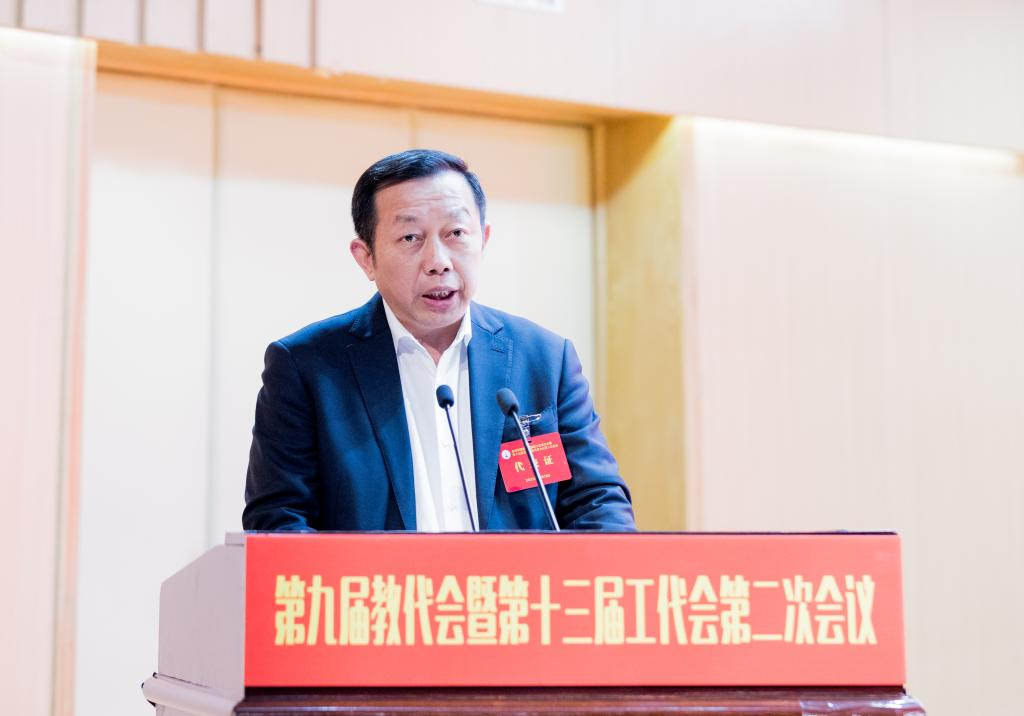
President and Deputy Party Secretary Le Chuanyong delivered a work report
At the meeting, Le Chuanyong delivered a report titled “Striving for Breakthroughs to Promote Leapfrog Development, Working Hard to Write a New Chapter, and Uniting in the Struggle to Accelerate the Development of Taizhou University.” The report reviewed the university’s achievements in 2025 in areas including teaching reform, discipline development, scientific research, talent recruitment and cultivation, social services, international cooperation, and supporting work. It also analyzed the difficulties and challenges the university faces.
Looking ahead to 2026, and focusing on the strategic goal of “Coordinated Advancement of University Upgrading and Doctoral Program Application, Uniting to Strive for Excellence,” Le emphasized the need to concentrate on key indicators, deepen industry–education integration, and build both a high-quality education system and a high-level governance system. He said these efforts would contribute to Zhejiang’s broader goals of strengthening education and advancing Chinese modernization.
Le also outlined key tasks for the coming year, including: strengthening achievement-oriented teaching reform; enhancing discipline development and advancing degree-program construction; cultivating landmark research achievements and building strong platforms and teams; improving mechanisms for attracting and developing high-level talent; expanding university–local cooperation and optimizing social services; broadening open education and improving international influence; improving educational conditions and optimizing the learning environment; and deepening inspection and rectification while strengthening service support.
Le Chuanyong also explained the formulation of the “Taizhou University 15th Five-Year Plan for Career Development.”
Li Junmin, Vice President and Member of the Party Committee, provided an explanation of revisions to the “Taizhou University Measures for the Evaluation and Appointment of Professional Technical Positions,” including revised application conditions for the Social Service-Oriented Teacher Track, the Party Affairs Research Track, and the Student Ideological and Political Education Track.
The congress also reviewed, in written form, the “Work Report of Taizhou University Teachers Union,” the “Report on Taizhou University’s 2025 Financial Revenue and Expenditure and the 2026 Budget,” and the “2025 Financial Work Report of Taizhou University Teachers Union.” Delegates voted to adopt the “Taizhou University 15th Five-Year Plan for Career Development” and the revised “Taizhou University Measures for the Evaluation and Appointment of Professional Technical Positions.”
More than 280 delegates, non-voting delegates, and specially invited delegates from teaching, research, management, and service positions across the university attended the meeting.
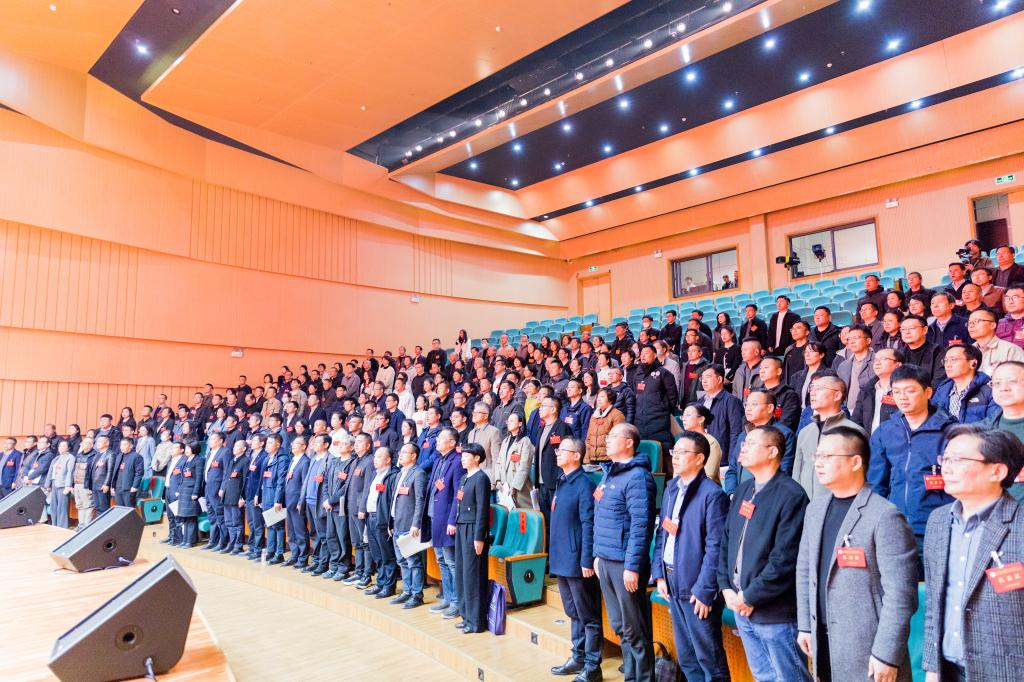
Conference Venue