On the morning of March 6, the Mobilization Meeting of the Training Class for Studying and Implementing the Spirit of the Fourth Plenary Session of the 20th Central Committee of CPC & the First Spring Meeting of 2026 was held. Aiming to thoroughly study and grasp the essence of the spirit, the meeting comprehensively reviewed and summarized the work of the past year, analyzed the current situation and tasks, further unified thinking and strengthened confidence to make a good start for the high-quality development of the university in the new year. Zhu Jian, Secretary of Taizhou University Party Committee, presided over the meeting and delivered a pep talk and report for the training class. Le Chuanyong, President and Deputy Secretary of the Party Committee, deployed the work for 2026.

At the Meeting
Zhu Jian pointed out that the Fourth Plenary Session of the 20th Central Committee of CPC is a highly important meeting held at a critical time when we are comprehensively advancing the great cause of building a strong country and national rejuvenation through Chinese-style modernization. It is not only a major political task to study, publicize and implement the spirit of the Fourth Plenary Session of the 20th Central Committee of CPC, but also a process of achieving new gains through constant learning as well as new progress through constant understanding. He required that we should accurately grasp the essence, focus on the strategic requirements for education set forth at the plenary session, and deeply integrate it with the university’s key work such as upgrading to a university, applying for doctoral programs, discipline construction and talent cultivation; We should strive to improve the learning effectiveness, devote great efforts to studying and researching, read the communiqué of the plenary session word by word, carefully understand the original meaning and principles, and effectively enhance the consciousness in implementation; We should adhere to the integration of learning and practice, turn learning outcomes into ideas and measures for planning work and promoting development, and ensure that the spirit of the plenary session take root and achieve practical results in the university.
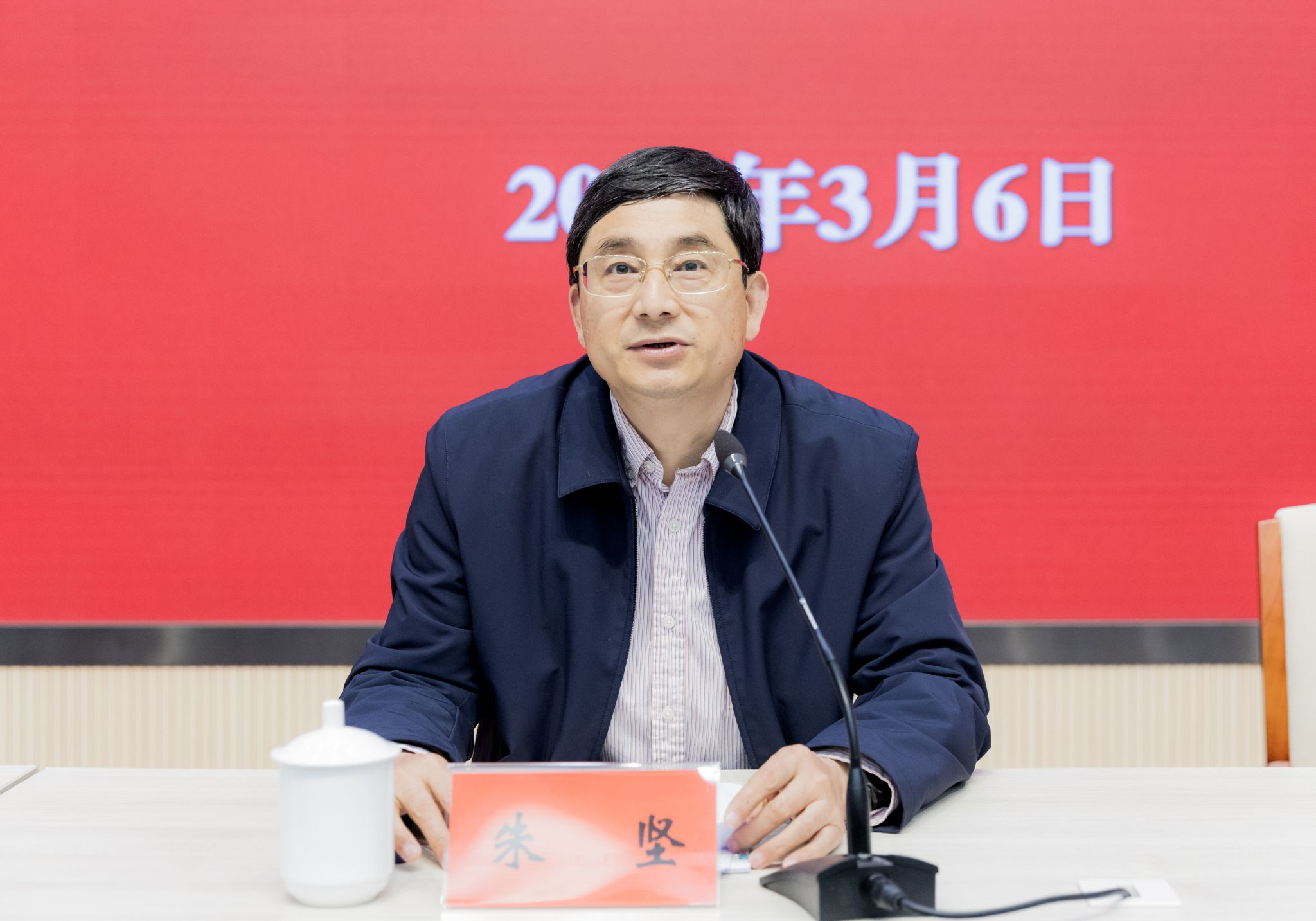
Zhu Jian delivers a report
In conveying the spirit of the first meeting,Zhu Jian pointed out that over the past year, the university has pursued high-quality development under the guidance of high-level Party building, and achieved remarkable results in all undertakings. He stressed that in the new year we should carry out our work in four aspects.
First, focus on the core task of striving for doctoral programs, and consolidate a solid foundation for the university development. We must raise our political stance, and deeply understand the important strategic value and significance of pursuing doctoral programs. It is the “core engine” to upgrade the university’s educational level, the “responsibility” to serve national and regional development, and the “banner of endeavor” that unites the consensus of the whole university; We must face up to gaps and weaknesses, clearly recognize the severe situation and practical challenges in the application for doctoral programs, and tackle the “tough bones” with a problem-driven attitude; We must clarify the proper approaches for a better specific work system, adopt a precise wall-chart system to manage implementation, innovate incentive assessment mechanisms, and take targeted efforts to make up for core shortcomings and solve key problems.
Second, vigorously implement the implementation of inspection rectification, and forge a strong and effective governance system. The first half of 2026 is a golden period for rectification, with tight time, heavy tasks and high requirements. The whole university must adopt a holistic approach, integrate immediate rectification with long-term institutional improvement, and take responsibility for the implementation with a pragmatic work style, making sure that every rectification measure can deliver tangible results. In this way, we can boost the high-quality development of the university, and enhance the sense of gain, happiness and security of teachers and students.
Third, foster a clean and upright political atmosphere, and build strong synergy for our undertakings. It must be deeply understood that a sound political atmosphere is a “magnet” that unites people, a “booster” that drives initiative, and a “purifier” that cleanses problems. We must strictly abide by the bottom line of discipline, adhere to the principle of seeking truth from facts, maintain unity and coordination, and steadily cultivate a sound political environment to provide a strong guarantee for the high-quality development of the university.
Fourth, strictly abide by discipline and rules, and always maintain preserve our political integrity. We must always constrain our words and deeds with the Party Constitution, rules and disciplines, internalize the principles of “observing disciplines, following rules, and holding the bottom line” in our minds and externalize them in our actions.
Zhu stressed that the university is currently at a critical stage of making breakthroughs in key tasks. He hoped that everyone would take this meeting as an opportunity to further strengthen confidence, boost morale, vigorously promote the “Six-Dedication” work style, carry forward the reclamation spirit, gather harmonious strengths, focus on pursuing development and entrepreneurship, and devote energy to ensuring effective implementation. With the determination to tackle tough challenges and the momentum to achieve breakthroughs, we should endeavor to compose a new chapter in the university’s high-quality development and strive for the early realization of the strategic goals of “upgrading to a university and applying for doctoral programs”.
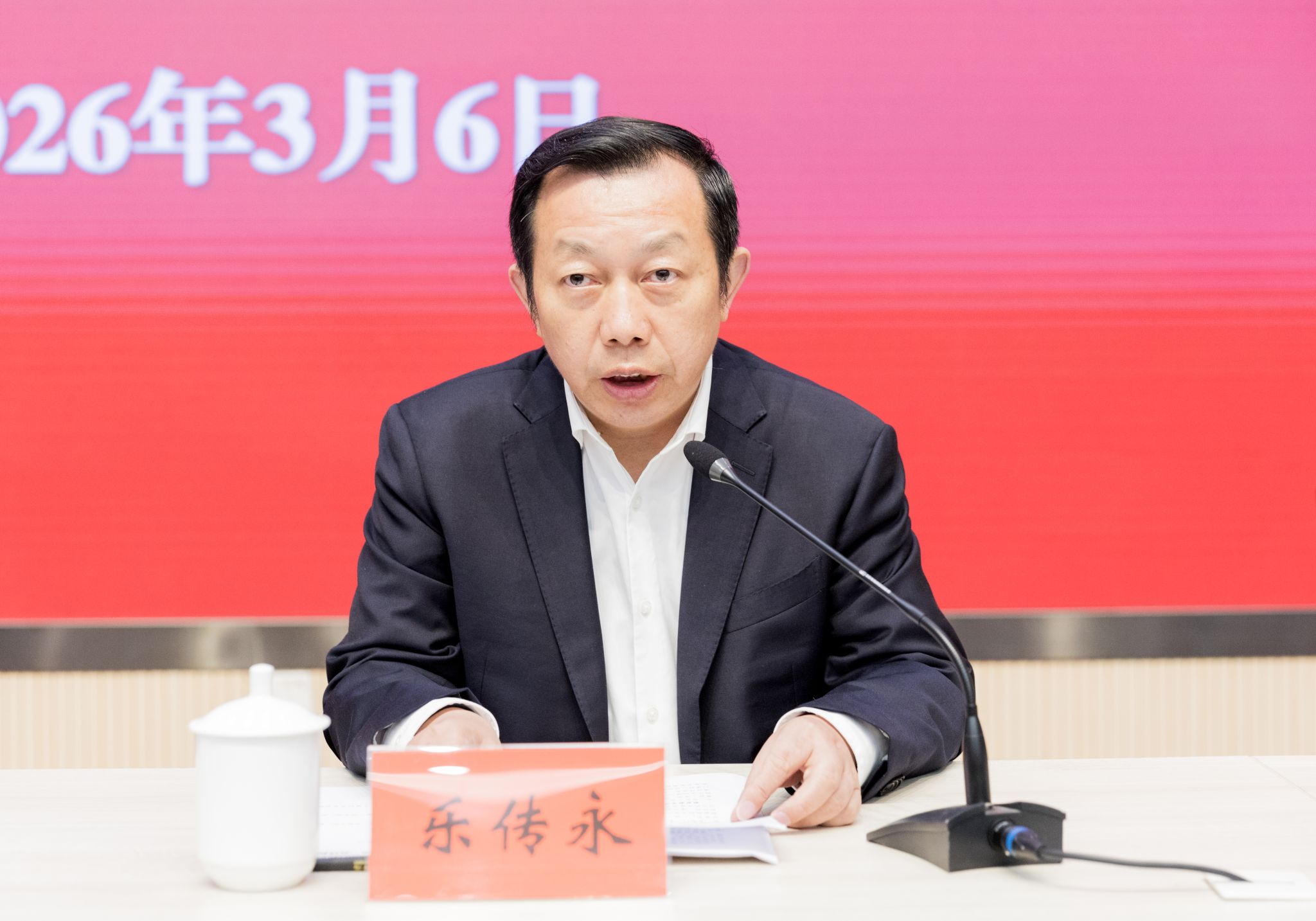
Le Chuanyong deploys the work for 2026
Le Chuanyong comprehensively reviewed the university’s work over the past year from nine aspects: new breakthroughs in education and teaching reform, new strides in the connotation-based development of disciplines, new leaps in scientific research and innovation capability, new horizons in international cooperation and exchange, new impetus in faculty development, new achievements in university‑local coordinated development, new progress in management and service levels, new improvements in educational conditions and support, and a new look in the construction of “Happy Taizhou University”.
Le stressed that 2026 marks the start of the 15th Five-Year Plan and is a crucial year for the university to advance the key tasks of “upgrading to a university and applying for doctoral programs” and achieve high-quality development. The university should focus on fighting seven key battles.
First, we should fight a positional battle on inspection rectifications to consolidate the foundation for high-quality development. Strengthen political responsibility and implement rectification with high standards; focus on prominent problems and solve both symptoms and root causes systematically; consolidate responsibilities to strengthen coordination across the whole chain; integrate rectification into central tasks to improve its quality and effectiveness in an all-round way.
Secondly, we should fight a quality battle in education and teaching to polish the hallmark of “a university that cares most for students”. Consolidate the gains from evaluation and rectification to optimize the teaching management system; focus on the classroom as the main front to strengthen the foundation of education; enhance the systematic nature of reform, and cultivate landmark achievements; deepen the integration of industry and education to build distinctive application-oriented features; promote the integration of specialization and innovation to stimulate creative vitality.
Third, we should fight a breakthrough battle on discipline construction to fully strive for degree programs. Seek improvement in connotation-based construction, explore new paths in interdisciplinary integration, achieve new breakthroughs in degree programs, and endeavor to improve the quality of postgraduate education.
Fourth, we should fight an integration battle on scientific research and innovation to enhance the capacity of serving local development. Strive for upgrades in the platform level, breakthroughs in landmark achievements, and practical results in the transformation of scientific and technological achievements.
Fifth, we should fight a protracted battle on talent cultivation to build a regional talent hub. Take concrete steps in targeted talent recruitment, break new ground in university-enterprise collaborative cultivation, and seek efficiency through institutional innovation.
Sixth, we should fight an expansion battle in opening-up and cooperation to deepen the university-city symbiotic development. Seek breakthroughs in cooperation platforms, deepen collaborative services, improve the quality of continuing education, and expand international cooperation.
Seventh, we should fight an efficiency battle in service support to strengthen the strong foundation for high-quality development. Seek improvement in hardware conditions, enhance governance efficiency, and ensure economic stability.
At the meeting, Ding Yizhi, Deputy Secretary of the University Party Committee, announced the list of outstanding secondary colleges, functional departments, and winners of individual awards in the 2025 annual comprehensive assessment.
The meeting was attended by members of the university’s Party and administrative leadership team, mid-level administrators, heads of directly affiliated units, academic deans and associate deans of secondary colleges, as well as specially appointed deputy heads of departments.