On April 1, Taizhou University held its 2026 Internationalization Working Meeting at Jiaojiang Campus. The meeting was chaired by Vice President Li Jianjun. Attendees included deans from schools and heads of relevant administrative departments.
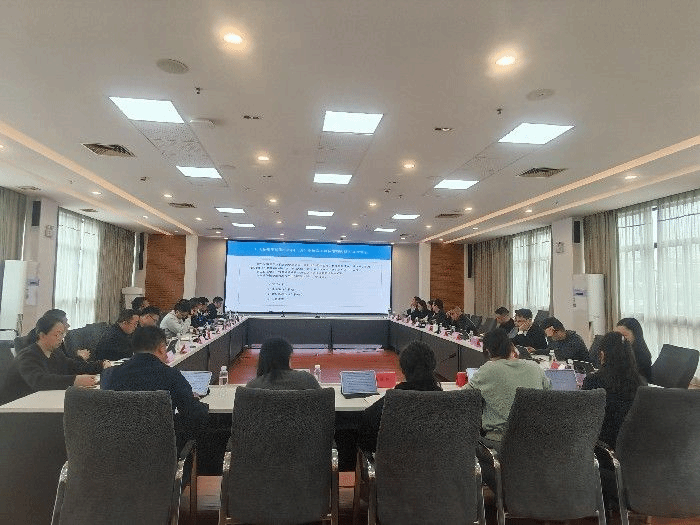
Meeting in progress
The meeting focused on the 2026 assessment indicators for schools’ internationalization performance, covering international graduate student enrolment and student outbound mobility. Based on each school’s disciplinary strengths, faculty resources, and student demographics, the meeting finalized allocation plans and support policies.
Recently, the International Office has been revising eight regulations covering Sino-foreign cooperative education, international student admissions and management, and outbound student administration. These updates aim to improve policy alignment, clarify responsibilities, streamline procedures, and standardize funding.
After listening to reports from the schools, Vice President Li Jianjun offered three observations:
“Worthy of celebration.” Looking back at 2025, he commended the notable achievements in establishing Sino-foreign cooperative education institutions, securing provincial-level “Silk Road” institute recognition, and managing outbound faculty and students.
“Worthy of vigilance.” He noted that 2026 marks the start of the 15th Five-Year Plan period. The national plan explicitly calls for building “global centers of education, science, and talent” and introducing a high-tech talent immigration system to promote high-quality development through high-level opening-up. Li stressed that the university’s internationalization efforts must shift from scale expansion to quality improvement, with early planning—especially to support the university’s goal of “upgrading to a higher-level university” by steadily expanding international graduate programs and strengthening experience in international student training.
“Worthy of detail and practicality.” For 2026, tasks must be executed with greater precision and pragmatism. He called for mobilizing initiative across units, overcoming challenges, and leveraging policy support, resource integration, and institutional innovation to elevate internationalization to a new level.