Zhejiang Province New Energy Materials Development Symposium was held at Taizhou University. With the theme of “Focusing on Frontiers, Interdisciplinary Integration, Empowering Youth, and Driving the Future,” this symposium brought together renowned experts and scholars from top domestic universities such as Nanjing University and Nankai University. They engaged in in-depth discussions on the cutting-edge trends and industrialization pathways in the field of new energy materials, injecting strong momentum into the innovative development of the regional new energy industry. The symposium was guided by Taizhou Association for Science and Technology and jointly organized by Taizhou Chemical and Chemical Engineering Association and Science and Technology Department of TU.
The opening ceremony was held on November 3 in Conference Room 407 of the Administration Building. Vice President Han Deman attended the event and delivered a welcome speech. The meeting was chaired by Jin Yanxian, Director of the Office of Science and Technology. Representative faculty and students from the School of Materials Science and Engineering, the School of Pharmaceutical and Chemical Engineering, and the School of Life Sciences were present.
In his speech, Han Deman pointed out that new energy materials, as a core pillar of the “dual-carbon” strategy, are driving interdisciplinary integration across fields such as new materials, new energy, and environmental engineering, giving rise to new business models and industries. He emphasized that as an application-oriented university rooted in Taizhou, the university has consistently upheld the educational philosophy of “building disciplines on industries, placing talents in workshops, and writing useful papers.” The university has established a discipline system that thrives alongside regional industries—six disciplines currently rank within the top 1% globally in ESI rankings, with chemistry and materials science and engineering maintaining leading positions. This provides solid talent and technological support for local industrial upgrading.
Han Deman extended an invitation to the attending experts to provide guidance and direction for the discipline development and research platform construction of TU. He expressed his hope that this seminar would serve as a catalyst for deepening cooperation—both among universities and between academia and industry—fostering a dynamic environment for research and scholarship. Such collaboration, he noted, would help cultivate young scientific and technological talent and contribute to new breakthroughs in applications for National Natural Science Foundation projects as well as in the generation of high-level scientific research achievements.
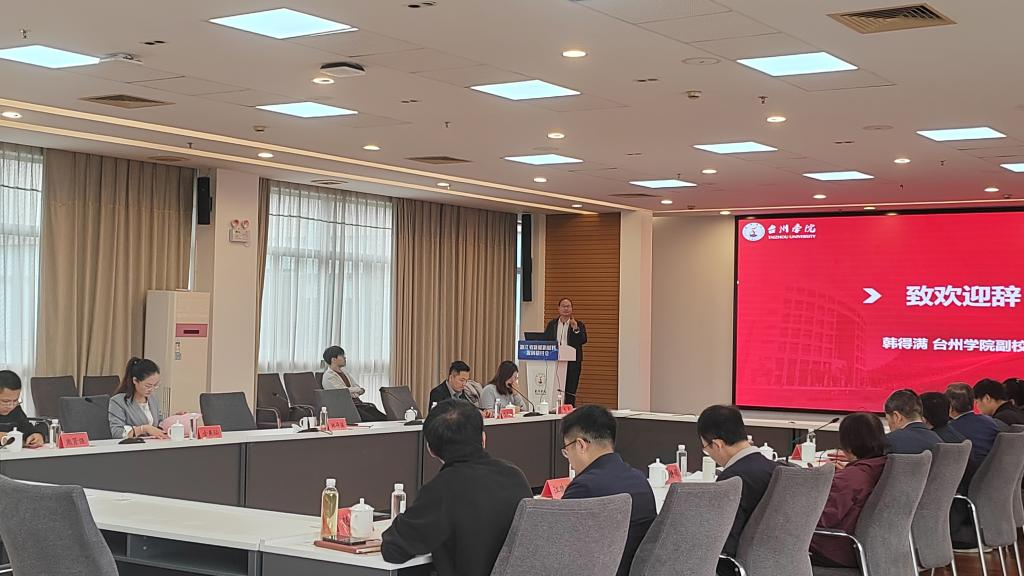
Conference Venue
The academic presentation section of the symposium was brilliant. Scholars, including Professor Jiang Dechen and Professor Zhu Wenlei from Nanjing University, as well as Professor Xie Wei and Professor Wang Huan from Nankai University, delivered keynote reports successively. Focusing on cutting-edge international directions such as high spatiotemporal resolution single-cell imaging, enhanced Raman spectroscopy for catalytic detection, nanomaterials-regulated CO₂ conversion, and interfacial chemistry of carbon-based catalysts, they shared the latest research achievements and technological breakthroughs, presenting an academic feast of both depth and breadth to the faculty and students in attendance.
After the meeting, the experts conducted on-site visits to TU’s Industrial Research Institute, Zhejiang Provincial Research Base for New Materials Professional Teaching Materials, and key new energy enterprises in Taizhou. They conducted in-depth investigations into the status and technological needs of regional industrial development, seeking precise entry points for collaborative innovation between industry, academia, and research.
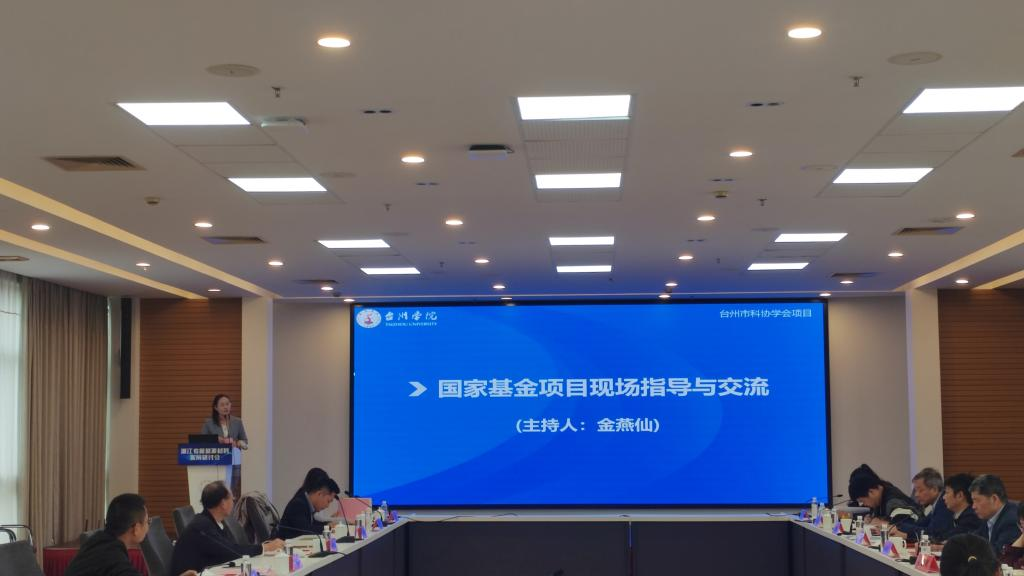
On-site Guidance and Exchange for National Fund Projects
The most notable highlight of this seminar was the specially arranged session for young scholars to present their research and receive guidance on fund applications. Three young doctoral scholars from TU reported on the core achievements of their National Natural Science Foundation projects. The experts provided them with comments and optimization suggestions. Subsequently, the 10 participating experts provided one-on-one guidance to 20 young faculty members from the fields of chemistry, materials science, and environmental engineering on applying for the National Natural Science Foundation. The experts offered hands-on guidance on aspects such as topic selection, research plans, and innovative points, resulting in lively on-site interactions and substantial, practical insights. The young faculty members in attendance expressed that the experts’ precise guidance directly addressed key challenges in scientific research, clarified the approach and direction for funding applications, and will significantly enhance the quality of project proposals and research innovation capabilities.
The successful hosting of this seminar has not only established a high-level platform for academic exchange and industry-university-research collaboration, but has also demonstrated TU’s disciplinary strengths in new energy materials and its proactive role in serving local development. Through its multidimensional format—integrating academic presentations, field research, and targeted guidance—the event effectively bridged cutting-edge technology with regional industrial needs. This has laid a solid foundation for advancing the high-quality development of the new energy industry in Taizhou and throughout Zhejiang Province, while also supporting the broader national “dual carbon” goals.
Moving forward, the university will build upon this momentum to further deepen collaborative innovation with academic and industrial partners, leveraging its disciplinary advantages to empower industrial upgrading and contribute more of the “Taizhou University wisdom” and “Taizhou University solutions” to regional economic and social development.
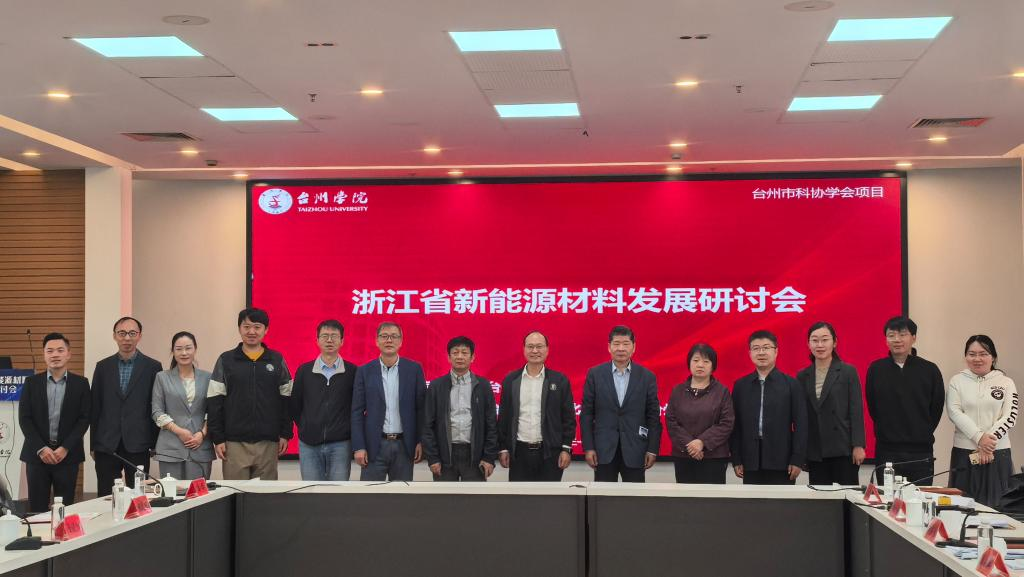
Faculty Representatives and Experts Group Photo