East-West Universities Mental Health Education Forum was held on November 19. It aimed to build a platform for exchange and collaboration in mental health education between eastern and western universities in China. The forum was jointly organized by Taizhou University and Tarim Vocational and Technical College, with co-organization from twelve universities including Tarim University and Nanjing Vocational University of Industry Technology.
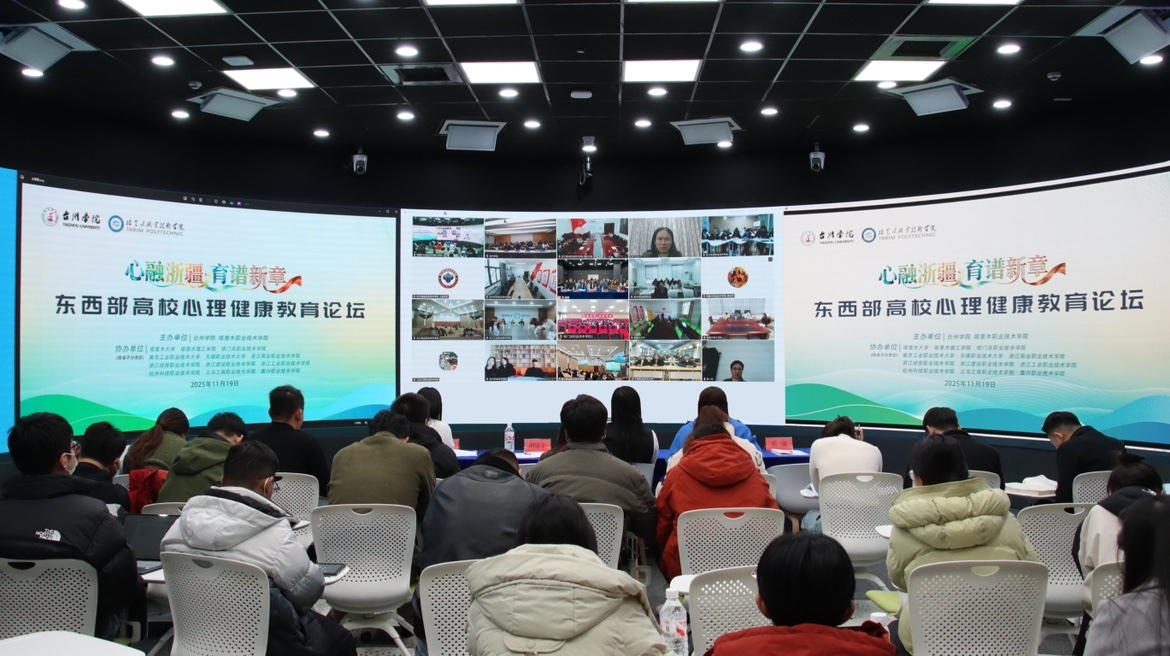
East-West Universities Mental Health Education Forum
In his opening speech, Yang Qifu, Director of the Student Affairs Department of TU, pointed out that amid adjustments in social structures and rapid iterations in information technology, mental health issues among college students have exhibited characteristics of complexity and diversity. It has become increasingly difficult for individual institutions to tackle these challenges alone on a broad scale. Based on this consensus, the two universities jointly initiated this forum, bringing together key personnel from the mental health education departments of fourteen institutions across eastern and western regions. The aim is to break down geographical barriers, build bridges for collaboration, promote the integration of practical experiences from the east with exploratory achievements from the west, and pool collective wisdom to address common challenges.
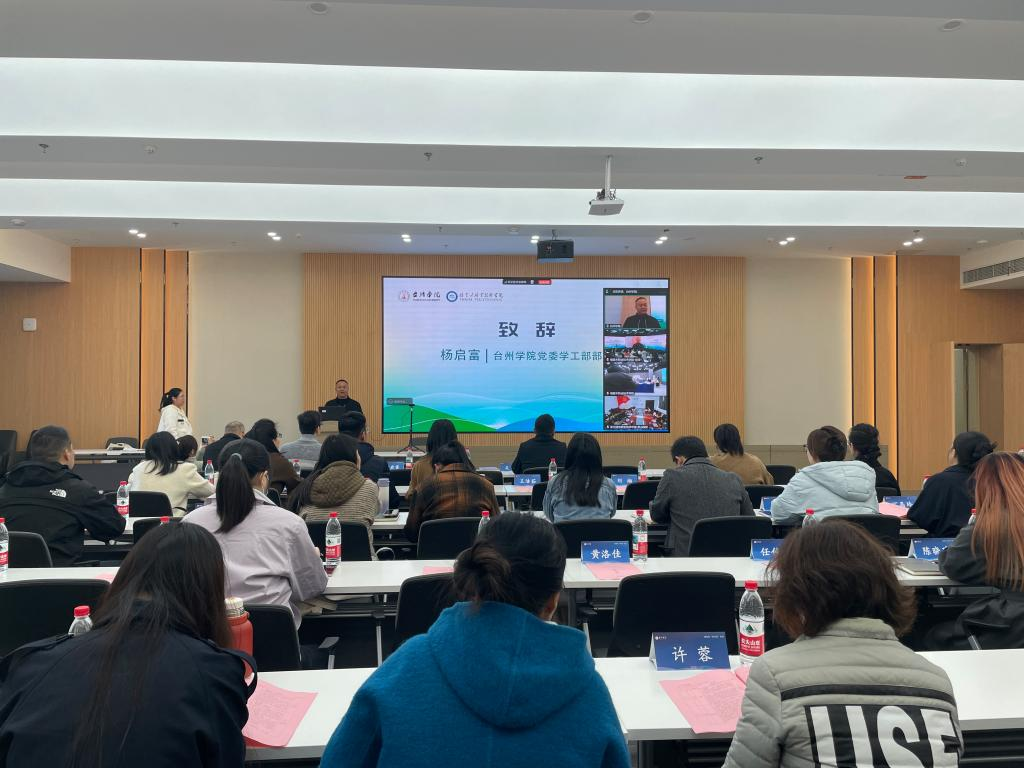
Yang Qifu from Taizhou University Delivering Opening Speech
The forum closely addressed the core needs of mental health education, centering on four key themes: “Four-Party Collaborative Pathways,” “Peer Support Systems,” “Crisis Linkage Intervention,” and “Positive Quality Cultivation.” The discussions incorporated advanced concepts from “Double First-Class” universities, distinctive approaches from local institutions, and practical explorations from vocational colleges, ensuring comprehensive coverage of experiences across various types of higher education institutions.
During the keynote report session, experts in university mental health education shared cutting-edge achievements and practical insights. Professor Zhang Jinyuan, Director of the Mental Health Education Center at Huazhong University of Science and Technology, delivered a presentation titled “Building a School-Family-Medical-Community Collaboration Mechanism to Jointly Safeguard Student Mental Health.” He provided an in-depth analysis of key nodes for integrating resources from schools, families, medical institutions, and communities, proposing practical pathways for constructing a comprehensive psychological support system.
Associate Professor Wu Yiling, Director of the Mental Health Education and Counseling Center at Jinhua Polytechnic, introduced a peer psychological work team cultivation model summarized from the university’s practices. Described as “using courses for training and competitions to enhance skills,” this model offers a reference solution for strengthening the foundation of campus psychological safety through all-staff education.
In her report titled “Psychological Work: Work About Humanity,” Associate Professor Lu Xiaohua, Director of the Mental Health Education and Counseling Center at Nanjing University of Posts and Telecommunications, detailed crisis identification methods, reporting standards, and handling procedures. Her presentation provided a practical guide for universities to conduct precise crisis interventions.
Additionally, Associate Professor Su Binyuan, Head of the Mental Health Education and Counseling Center at South China Normal University, introduced the university’s psychological education system, which integrates the “Starlight Plan” and the “Lighting Plan.” This approach showcases innovative achievements in the coordinated advancement of preventive and developmental mental health work.
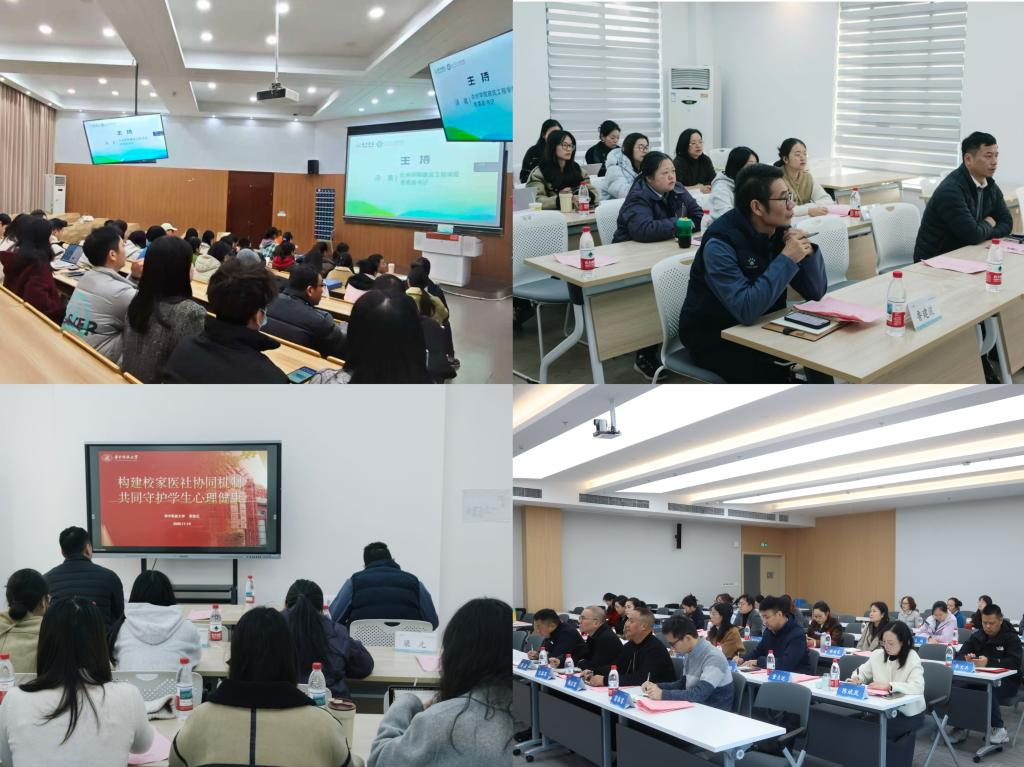
On-site at various university branch venues
The four presentations sparked widespread resonance among attendees. During the exchange and discussion session, representatives from various universities shared experiences and exchanged ideas around the forum’s themes.
Mei Jiao, a member of the Party Committee and Vice President of Tarim Vocational and Technical College, introduced the college’s “12345” psychological education model. Focusing on the characteristics of ethnic minority students—particularly in cultural adaptation and academic foundation—the college has advanced the integration of psychological and moral education through a four-level team structure combining full-time and part-time staff.
Representatives from Tarim University and Nanjing Vocational University of Industry Technology also elaborated on their respective innovative measures in psychological education, fostering a lively and engaging atmosphere for on-site exchange.
The successful hosting of this forum has not only provided a valuable platform for learning and exchange between mental health education teams from universities in the eastern and western regions but has also built a bridge for deeper cooperation and integrated innovation in this field. It has thereby injected fresh collaborative energy into promoting the high-quality development of psychological education in universities for the new era.