April 23 marks the 31st “World Book Day”, when the fragrance of books travels far and wide. On April 17 local time, the “Encountering China” Chinese cultural theme exhibition made its debut at the Paris Book Festival in France.
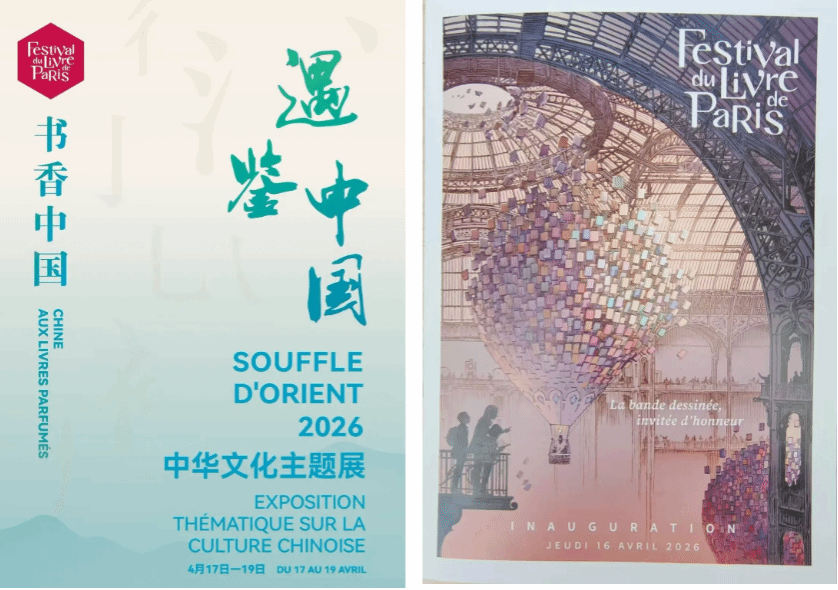
“Encountering China” Chinese cultural theme exhibition makes debut at Paris Book Festival in France
Originally known as the “Paris Book Fair,” the “Paris Book Festival” is held annually in mid-April over three days, standing as one of France’s major annual public cultural events. Advocating public participation and cross-cultural dialogue, the festival has become a highly influential platform for cultural exchange in France and across Europe.
Carefully crafted by School of Foreign Languages at Taizhou University, the English version of “台州有请”(English title: An Invitation from Taizhou) has been selected into the excellent bibliography of Taizhou Municipal Party Committee’s Publicity Department, narrating the captivating stories of Taizhou to the world.
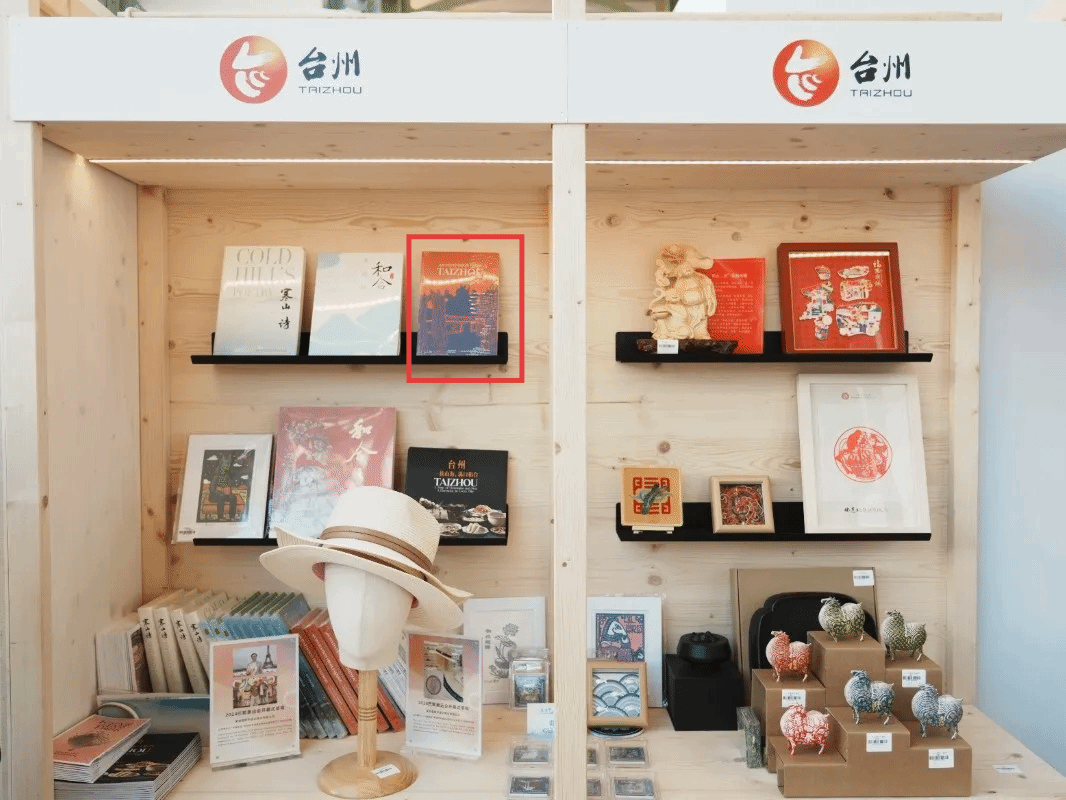
Taizhou Cultural Exhibition Area: Books and Intangible Cultural Heritage Creative Products
The Chinese edition of “An Invitation from Taizhou” is a cultural reader that embodies the humanities and history of Taizhou. Authored by writer Wang Han and illustrated by woodcut artist Zhao Zongbiao, it was published by Zhejiang People’s Publishing House in 2023. Under the careful guidance of TU leadership, Dean Wang Gang of School of Foreign Languages spearheaded the formation of a core translation team. Teachers including Wang Aiqin, Liu Fen, Liu Changmin, Cui Ruiguo, Ke Yuguo, Mao Jinglin, Qian Hong, Xu Weizhi, and Ye Lu collaborated to tackle the challenges—from repeatedly refining multilingual terminology, to accurately rendering cultural allusions, names of people and places, to ensuring stylistic consistency throughout the book. The team meticulously polished the translation through multiple revisions, breaking down language barriers while preserving to the greatest extent the essence of the original work and the unique charm of Taizhou culture.
The English edition opens a new window for the international academic community and English-speaking readers to understand Taizhou and traditional Chinese culture. It also provides valuable materials for international scholars studying China’s local culture and the philosophy of harmony, enabling foreign researchers to directly access the original sources of Taizhou culture for in-depth study and discussion, thus contributing Chinese wisdom and Chinese solutions to global cultural research.