A roundtable discussion titled “Preserving the Manuscripts, Carrying the Legacy Forward: Preparing Supplementary Collection of Xu Daozheng’s Poetry and Prose for Publication” was held on October 13. Li Jianjun, Vice President and Member of the CPC Taizhou University (TU) Committee, attended the event and delivered remarks. Participants included Xu Jiaji and Xu Hongji, descendants of Xu Daozheng; Wu Xudong and Jiang Haijun, experts on the history and culture of Zhuji City; Xia Chongde and Hu Zhengwu, faculty members of TU; and all staff members of the University Archives.
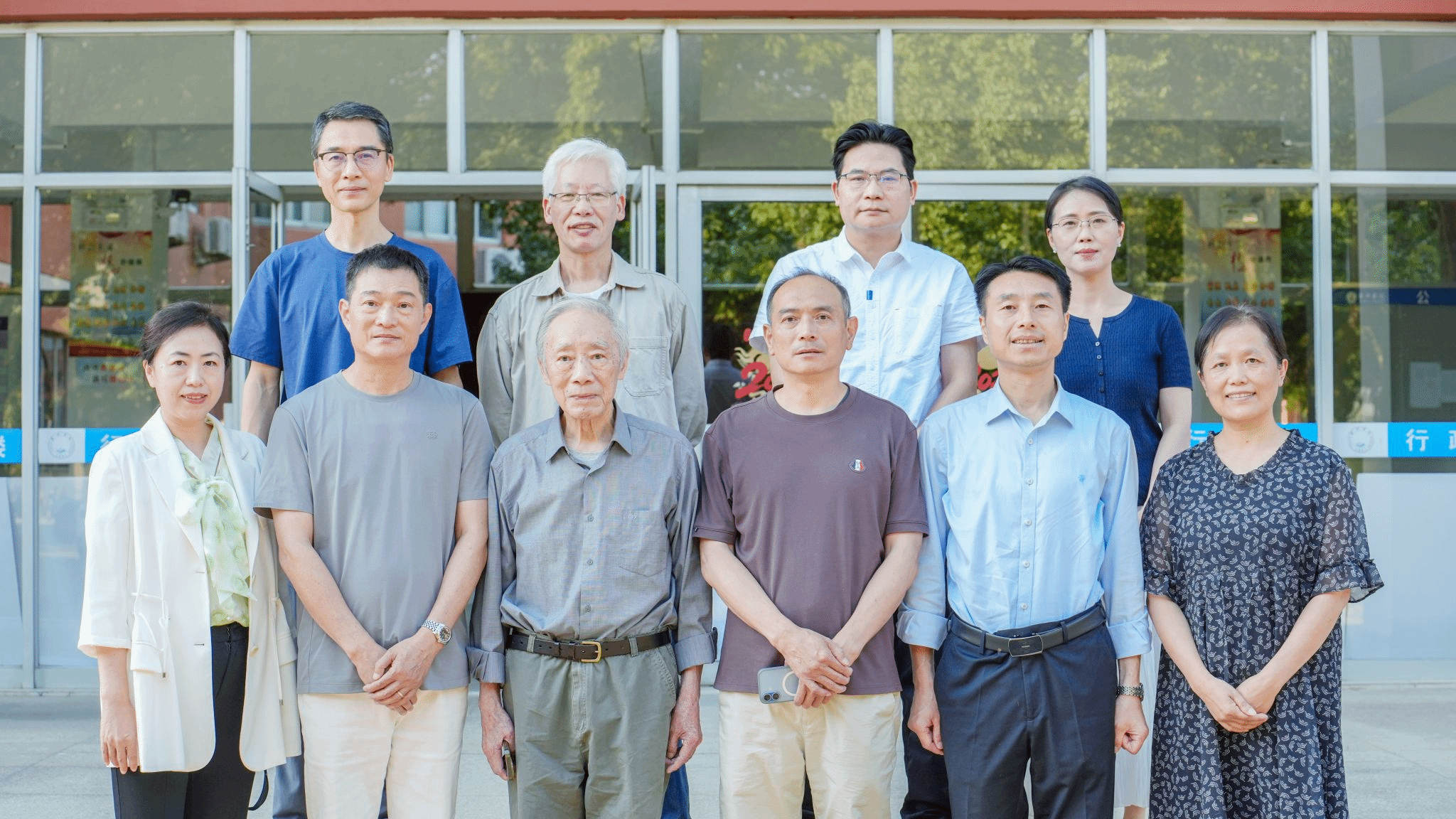
Group photo of the participants
At the meeting, Xia Chongde, who compiled the volume, presented an update on the collection, collation, and annotation of materials for the Collection, outlining the challenges involved in compiling the book and the preparations for its publication. Participants offered suggestions on textual collation, work selection, annotation standards, and page layout, helping to further refine and improve the volume.
Li Jianjun spoke highly of the progress made in compiling the volume, noting that it brings together a comprehensive collection of materials, features meticulous textual collation, and provides precise annotations. He commended the volume as an important achievement in TU’s efforts to organize and preserve historical documents. He then outlined his vision for the preservation and promotion of Xu Daozheng’s legacy from three perspectives: forging connections, advancing the work, and extending the influence.
First, forging connections through Xu Daozheng. Xu Daozheng was a distinguished modern cultural figure who excelled as an educator, poet, scholar, and calligrapher. He was also a respected figure in the local community of Zhuji. His poems, essays, manuscripts, and publications embody rich historical information and cultural heritage. It was the shared endeavor of organizing his writings and documents that brought the participants together. By taking these materials as a common bond, they can jointly explore Xu’s life and intellectual world and build a platform for cultural research and exchange.
Second, advancing the documentary research through sustained efforts to collect, collate, and organize Xu’s writings and documents. The publication of the volume will mark the starting point for further efforts to collect and collate his other surviving works, including A Collection of Xu Daozheng’s Calligraphy, Chinese Philology, A Rhymed Guide to the Radical Components of Shuowen Jiezi, and Selected Poems of Zhuji, an anthology of poems by distinguished figures from Zhuji compiled by Xu Daozheng. Building on these efforts and the body of materials assembled, plans will be made to compile The Complete Works of Xu Daozheng, which will bring together and preserve his scholarly and literary legacy.
Third, extending the influence of Xu’s legacy through creative transformation and innovative development. Building on the discovery, organization, and preservation of historical documents, efforts should also be made to bring Xu’s cultural legacy to life. Through various artistic forms, including feature films, documentaries, and stage productions, his poetry and prose can be presented in ways that vividly convey his profound patriotism and cultural refinement. In this way, the ideas and spirit of this distinguished figure can reach beyond the pages of old manuscripts and be carried forward in the new era.
Li Jianjun concluded: “Though he is gone, his spirit lives on.”
The experts present expressed their commitment to working together to ensure the high-quality publication of the volume, conduct further research on the historical documents left by Xu Daozheng, safeguard the region’s cultural heritage, and carry forward his spirit.
The roundtable helped build consensus and clarify the direction of future work, laying a solid foundation for the successful publication of Supplementary Collection of Xu Daozheng’s Poetry and Prose and for subsequent efforts to collect, organize, and study documents related to Xu, as well as to promote his cultural legacy.