A symposium on the pilot project for AI-powered continuing education reform in Taizhou was recently held in the Academic Lecture Hall on the 7th floor of the Science and Technology Complex at Taizhou University (TU).
The symposium was attended by a delegation from Zhejiang Province Human Resources and Social Security (HRSS) Department, including Fu Canghai, Director of its Personnel and Education Guidance Service Center; Chen Weihong, Deputy Director of its Division of Professional and Technical Personnel Management; and Wen Chunyang, Deputy Director of its Division of Policies and Regulations, who provided guidance on the project. Han Deman, Vice President of TU; Ma Deqiu, a Level III Civil Service Official at Taizhou HRSS Bureau; and relevant officials from the bureau, the School of Continuing Education and the School of Artificial Intelligence at TU also attended the symposium.
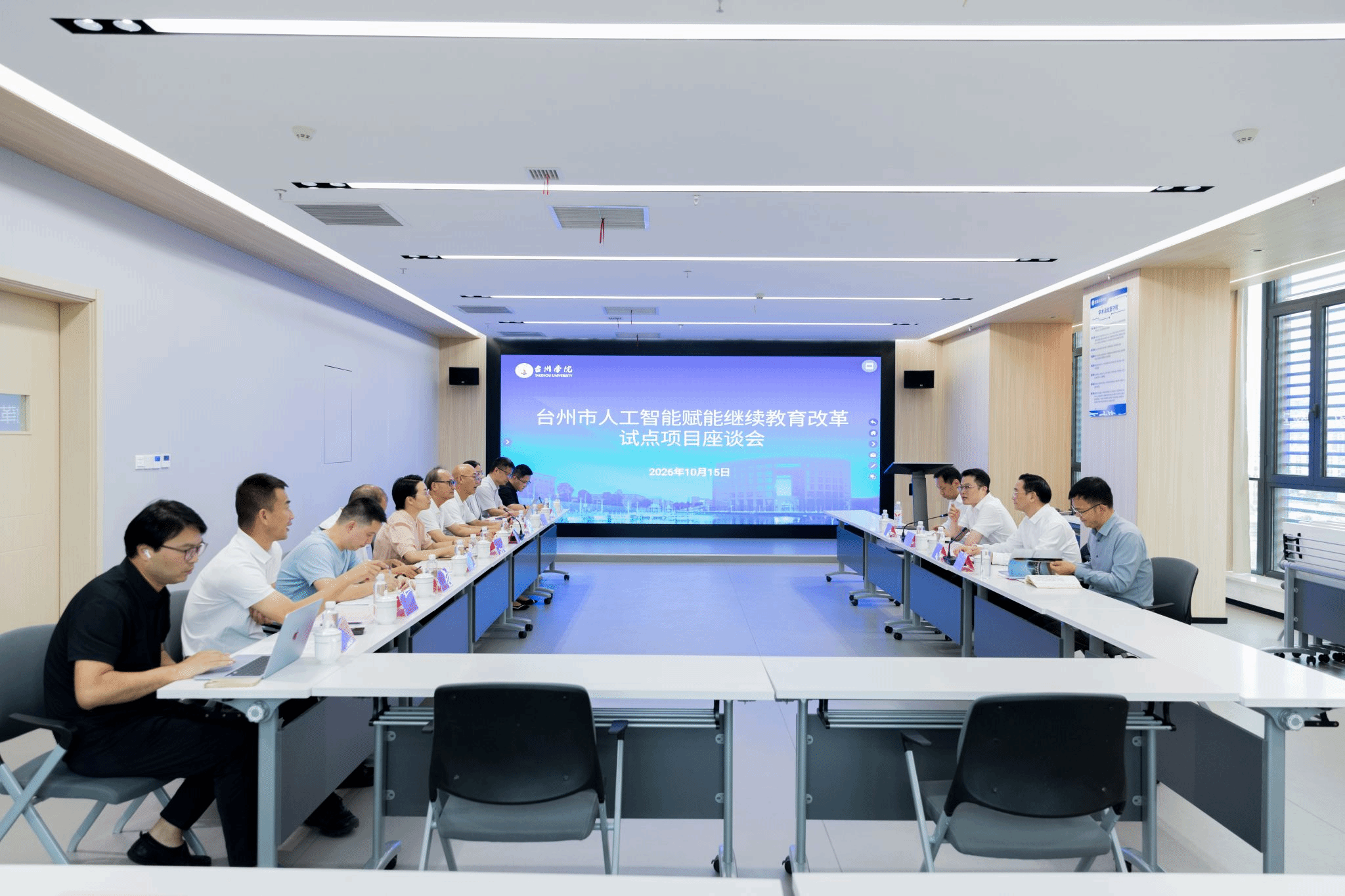
Discussion at the symposium
At the meeting, Liu Fei, Director of the Division of Professional and Technical Personnel Management of Taizhou HRSS Bureau, presented an overview of the progress made in the pilot project on AI-powered continuing education reform and demonstrated the functions of the platform. Participants held in-depth discussions and exchanges on the project’s achievements, existing challenges, and plans for the next stage.
Officials from Zhejiang HRSS Department spoke highly of the progress made in the Taizhou pilot project and offered guidance on its further development. They called for the project to be advanced to high standards and emphasized the importance of developing practical experience that could be replicated and promoted elsewhere. Taizhou HRSS Bureau stated that it would continue to strengthen government-university collaboration and further refine the Taizhou model of AI-powered continuing education, with the aim of contributing Taizhou’s experience to the province-wide digital transformation of continuing education for professional and technical personnel.
Han Deman welcomed the delegation from Zhejiang HRSS Department. He noted that the university highly valued this opportunity to participate in the reform pilot project and would make every effort to ensure its effective implementation. He also expressed the hope that the HRSS authorities would provide more support and guidance. The university would leverage its strengths in talent development and provide supporting services for a range of application scenarios, including corporate training, while establishing a sustainable, market-oriented implementation mechanism.
Before the meeting, the participants visited the exhibition hall demonstrating TU’s achievements in developing a high-level application-oriented university.
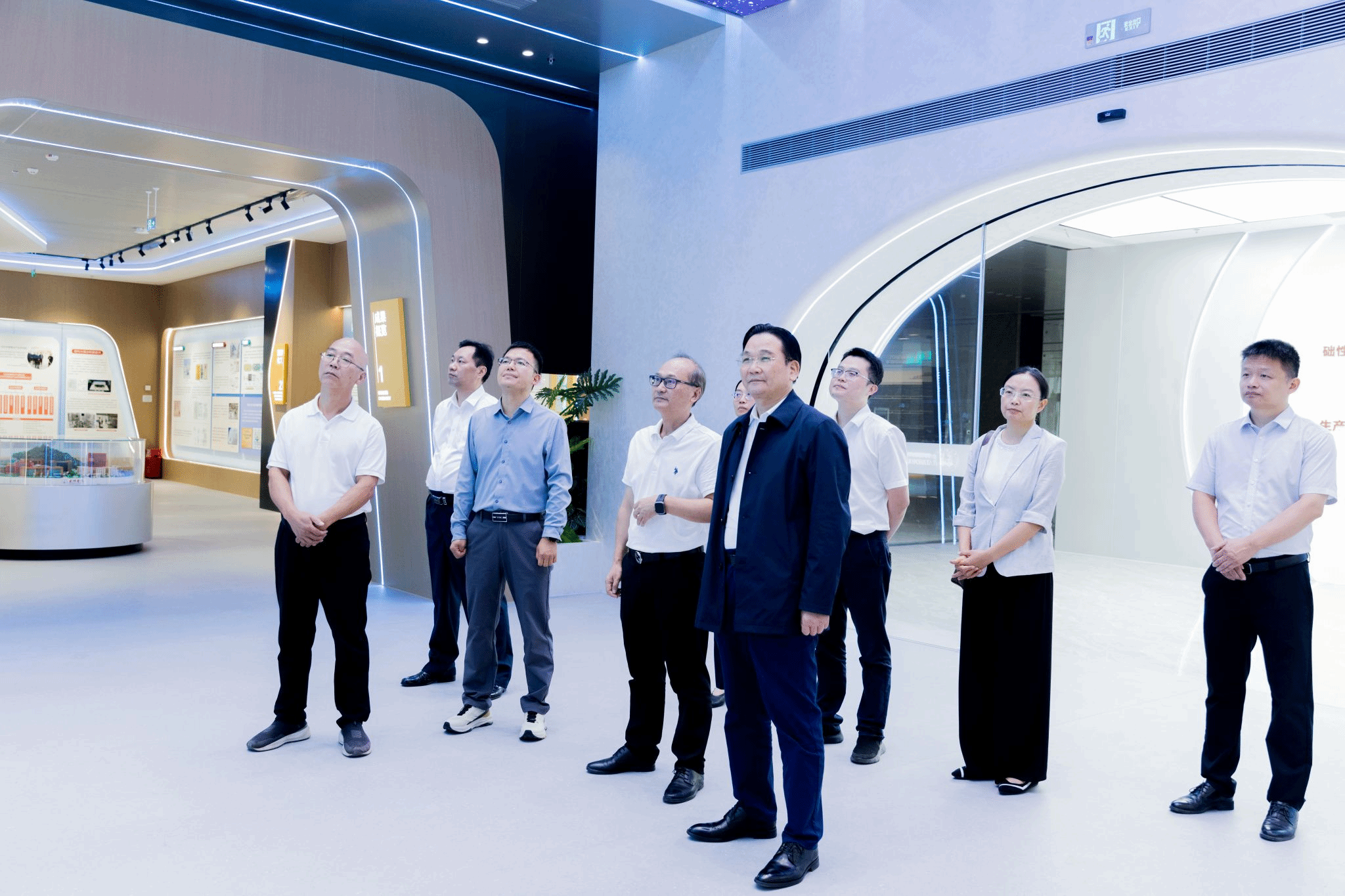
Participants visiting the exhibition hall