The Advanced Research Institute and the School of Pharmaceutical and Chemical Engineering co-hosted on October 16 a frontier seminar on energy optoelectronics in Conference Room 301. Five renowned domestic experts and scholars were invited to deliver academic lectures, exploring cutting-edge breakthroughs and future directions in energy optoelectronics with faculty and students. Attendees included research team leaders, key faculty members, and graduate students.
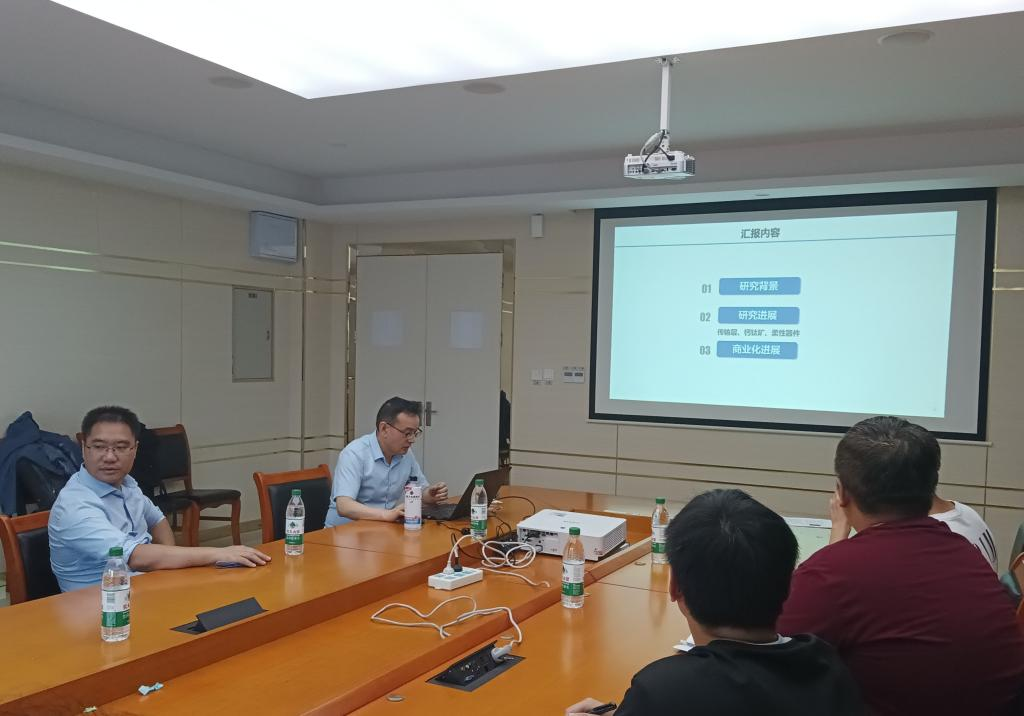
Seminar in Progress
Researcher Ge Ziyi from the Ningbo Institute of Materials Technology and Engineering, Chinese Academy of Sciences, discussed the application potential of flexible perovskite solar cells in building-integrated photovoltaics, distributed power generation, and wearable electronics. He shared his team’s breakthroughs in designing 2D ferroelectric materials, passivating cyano derivatives, and incorporating zwitterionic elastomers, leading to the successful fabrication of flexible perovskite cells with a record-breaking 25.05% efficiency – a new world record for such cells.
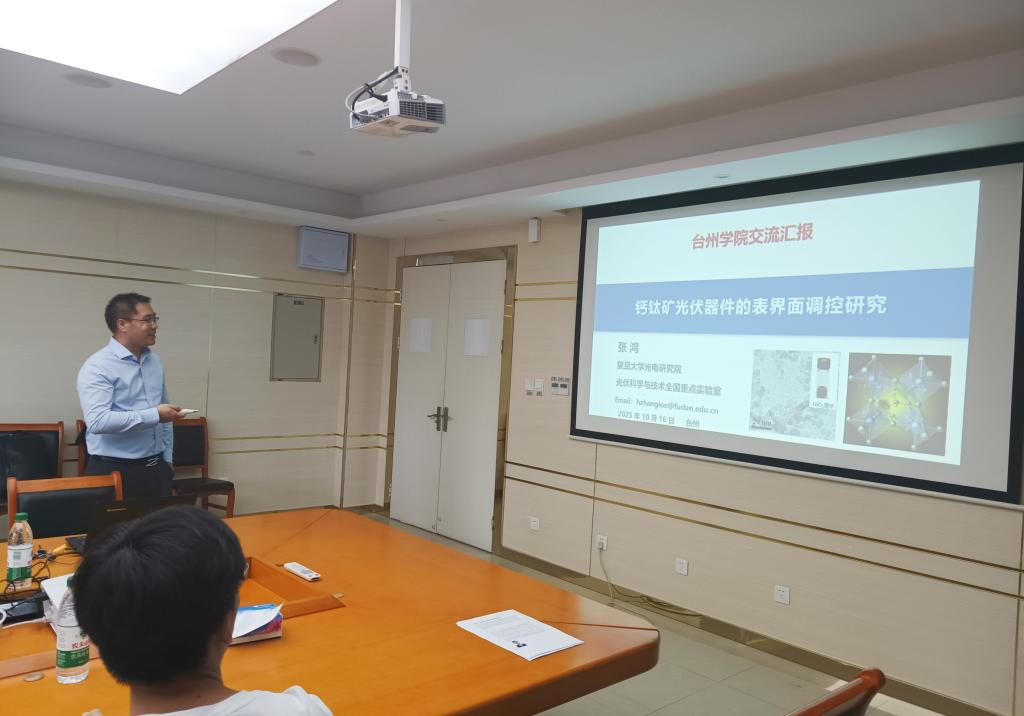
Seminar in Progress
Researcher Zhang Hong from Fudan University addressed challenges like large-area uniformity and stability in perovskite semiconductor films. He proposed a strategy for in-situ construction of mixed-dimensional perovskite heterojunctions at the buried interface, achieving a leading efficiency of 25.1% for methylammonium-free inverted perovskite solar cells. He also developed a supramolecular composite passivation strategy, resulting in highly efficient (>22%) and stable cells (retaining >91% initial efficiency after 1000 hours under illumination at 75°C).
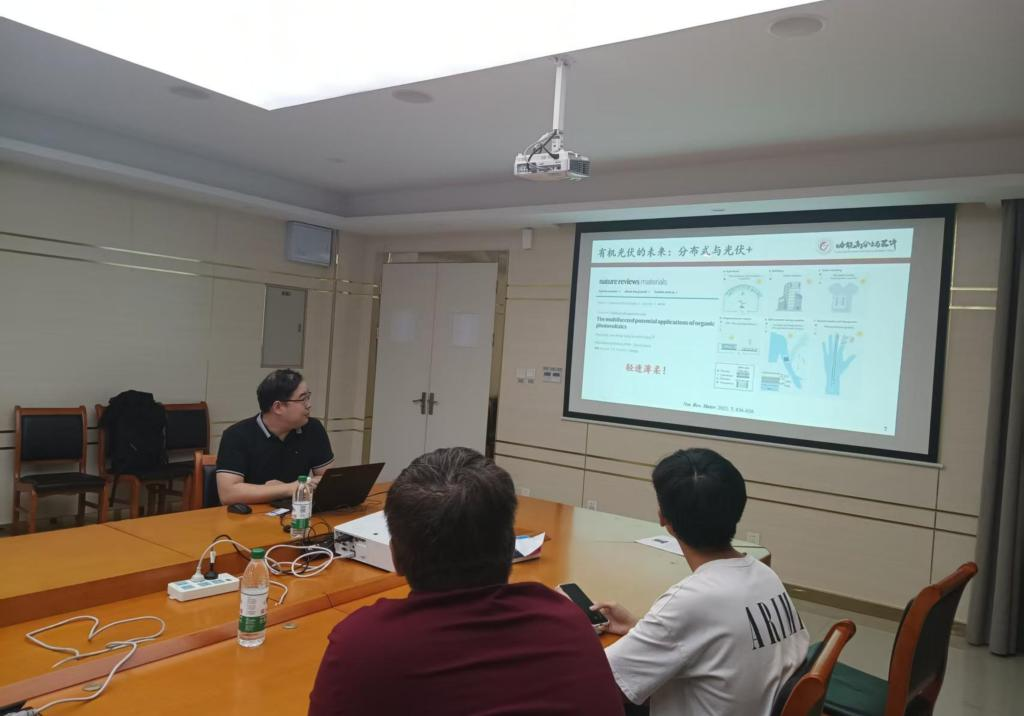
Seminar in Progress
Researcher Chen Chong from the Hefei Institutes of Physical Science, Chinese Academy of Sciences, shared his work on “High-Efficiency Chalcogenide Solar Cells and Tandem Perovskite Solar Cells.” He pioneered the concept of chalcogenide/perovskite tandem heterojunction solar cells and was the first to use a low-temperature solution method to produce certified CuInS2 solar cells with 11.6% efficiency, opening new avenues for high-efficiency chalcogenide cell research.
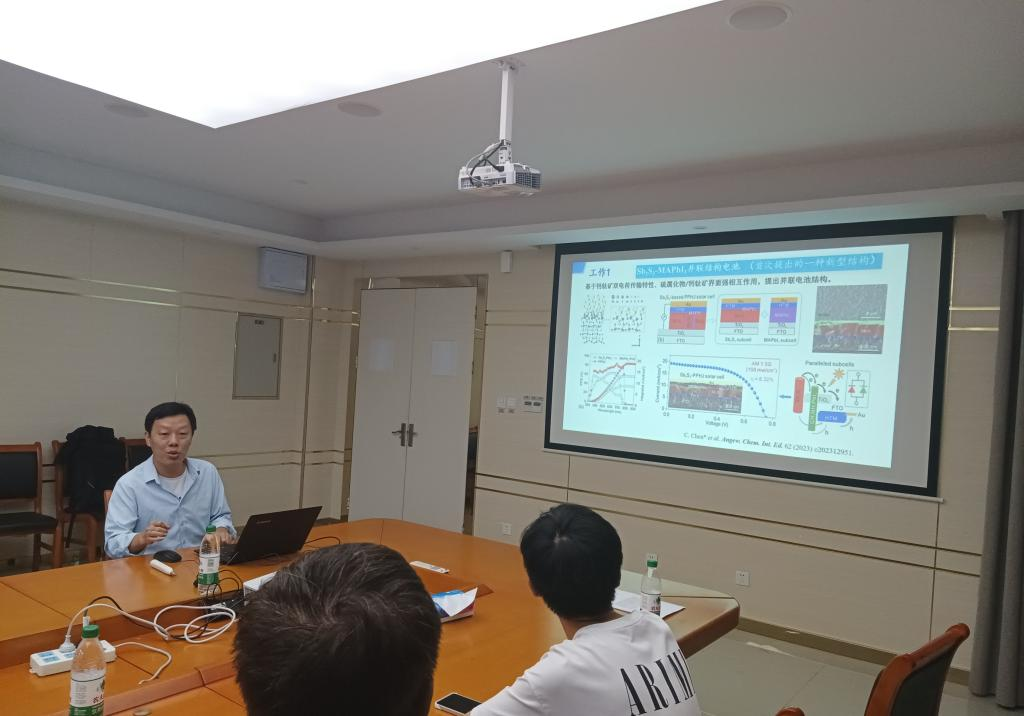
Seminar in Progress
Researcher Cheng Pei from Sichuan University outlined strategies such as constructing “layer-by-layer” active layers using wide-bandgap inorganic semiconductors and narrow-bandgap acceptors, using small molecule additives to create donor layers with red-shifted and narrowed absorption, and developing ternary blended active layers. These approaches successfully yielded high-performance transparent organic photovoltaics, offering technical support for building integration, agricultural greenhouses, and smart windows.
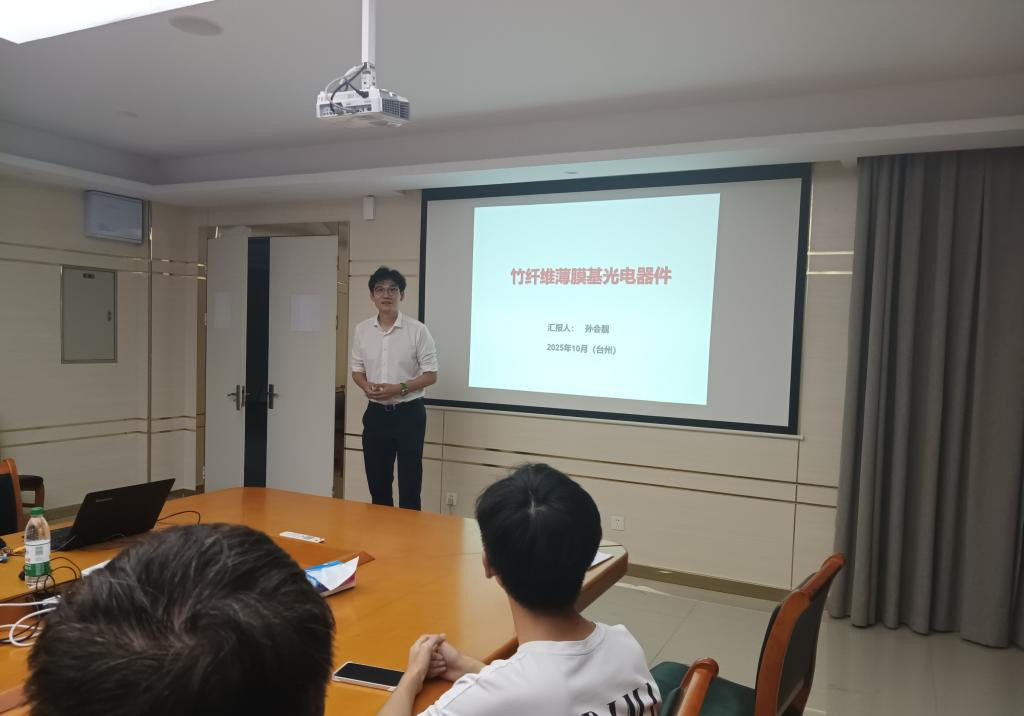
Seminar in Progress
Professor Sun Huiliang from Guangzhou University elaborated on the significance of n-type polymer semiconductors in organic electronics. He shared his team’s findings in creating new n-type polymers and fabricating high-performance devices, providing fresh perspectives for overcoming limitations like the scarcity and underperformance of existing n-type polymer materials.
Faculty and students engaged in in-depth discussions with the experts on hot topics and challenges in photovoltaic materials research, fostering a strong academic atmosphere. This lecture series broadened participants’ academic horizons and offered new ideas and directions for the school’s research in energy optoelectronics.