Medical School of Taizhou University held the 22nd Taizhou Medical High-end Forum and Traditional Chinese Medicine Discipline Development Seminar on November 6. Professor Dou Xiaobing from Zhejiang Chinese Medical University was invited to deliver a special academic report. Professor Chen Juan from Tongji Medical College of Huazhong University of Science and Technology and Professor Wu Yaosong from Henan University of Chinese Medicine attended the seminar. The meeting was chaired by Professor Cao Xuan, Dean of the Medical School. More than 80 participants attended the event, including Zhou Min, Deputy Secretary of the Party Committee of the school; Wang Xianghu, Deputy Director of the Discipline and Research Office; Luo Jianchang, Secretary of the Party Branch and Deputy Chief Physician of the Integrated Traditional Chinese and Western Medicine Rehabilitation Department at Taizhou University Affiliated Municipal Hospital; as well as faculty and students from the Medical School.
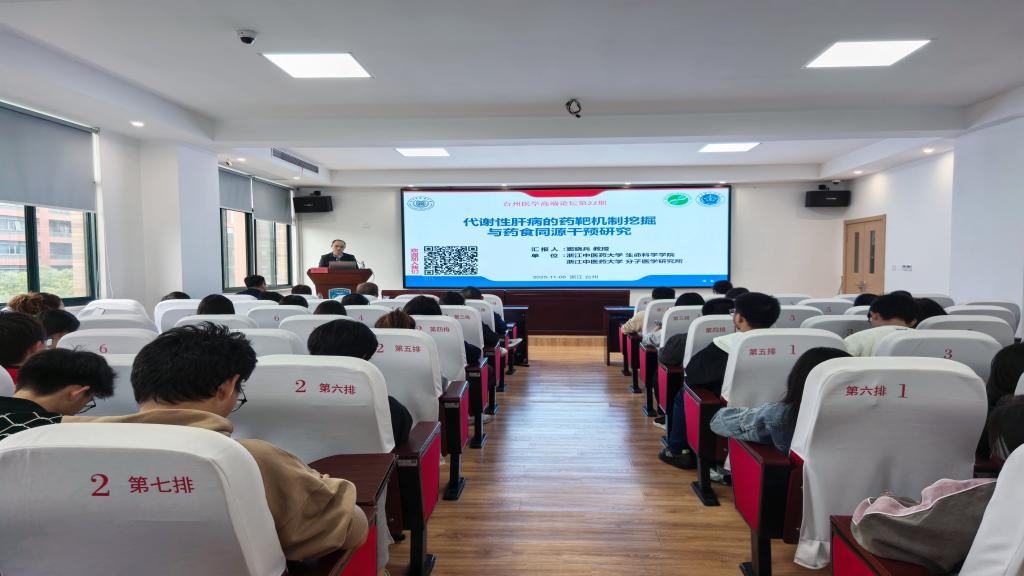
Professor Dou Delivering the Academic Lecture
In a special report entitled “Modern Transformation of Medicine-Food Homology: Revealing the Wisdom of Traditional Chinese Medicine in the Prevention and Treatment of MAFLD,” Professor Dou Xiaobing addressed several key areas. He focused on the current research into the pathogenesis of metabolic liver diseases and the present status of therapeutic drugs. He also highlighted the research achievements of Zhejiang Chinese Medical University’s Multidisciplinary Innovation Team for the Prevention and Treatment of Metabolic Liver Diseases with Traditional Chinese Medicine—one of Zhejiang Province’s first TCM innovation teams—including their exploration of drug targets for MAFLD and ALD, as well as the intervention of medicine-food homologous herbs in metabolic liver diseases. Additionally, Professor Dou shared the team’s extensive experience and notable accomplishments in international exchange and cooperation, scientific research platform development, talent cultivation, and the translation of research outcomes into practice.
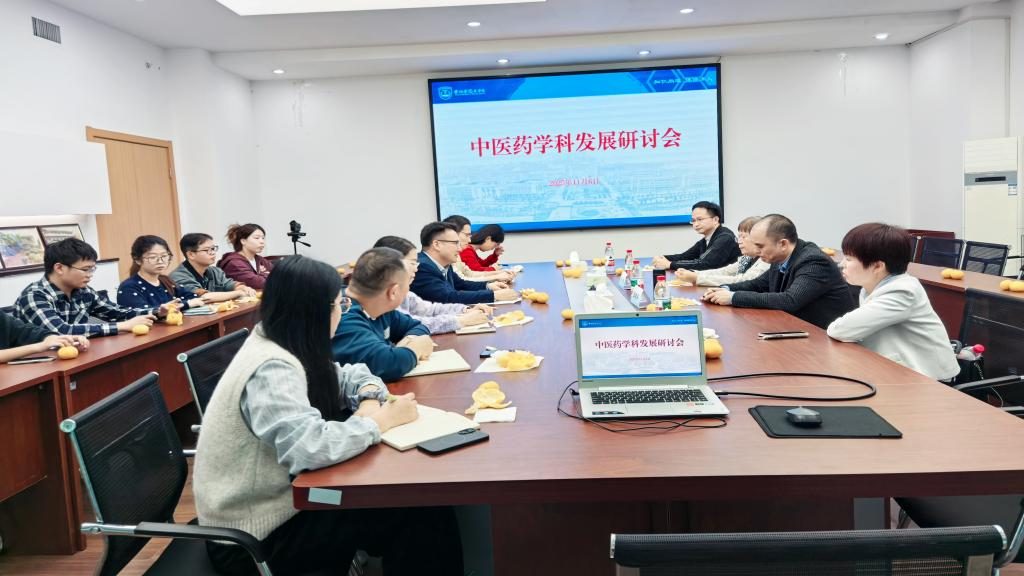
Traditional Chinese Medicine Discipline Development Seminar
At the symposium, participating experts and faculty and students engaged in enthusiastic exchanges. Guided by the spirit of the provincial high-quality development conference on traditional Chinese medicine, in-depth discussions were conducted on topics such as the construction of the TCM discipline, application for international cooperation platforms, major TCM research projects, enhancement of TCM service capabilities, joint graduate training, and scientific research innovation. The discussions aimed to accurately diagnose and advance the high-quality development of the TCM discipline at the Medical School.
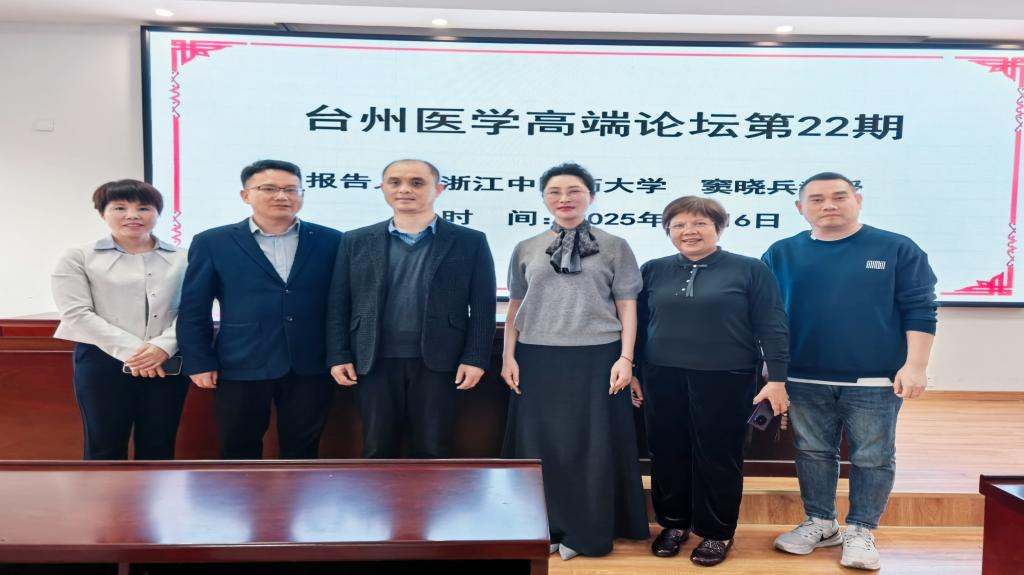
Group Photo of Experts and School Leaders
The successful hosting of this event has not only established a high-level academic exchange platform to support the development of the school’s traditional Chinese medicine discipline, but has also enabled the college to better grasp the direction of disciplinary development, consolidate efforts, and lay a solid foundation for optimizing its disciplinary structure, strengthening internal capacity building, and enhancing the quality of talent cultivation.
Looking ahead, the college will continue to adhere to a problem-oriented approach, deepen cooperation and exchanges with domestic and international TCM institutions, and persistently promote the inheritance, innovation, and development of the traditional Chinese medicine discipline. These efforts will contribute to the cultivation of high-quality TCM professionals and support the national Healthy China strategy.
Expert Profile:
Professor Dou Xiaobing is a Professor and Doctoral Supervisor at Zhejiang Chinese Medical University, where he also serves as Dean of the School of Life Sciences and Director of the Medical Research Institute (Lipid Metabolism Research Institute). He heads the Zhejiang-Hong Kong International Joint Key Laboratory for Liver-Spleen Co-Treatment in Traditional Chinese Medicine and directs the National Administration of Traditional Chinese Medicine’s Key Laboratory “Lipid Metabolism Research Level-3 Laboratory.” Recognized as an “Outstanding Young Scholar” in Zhejiang Province, he holds leadership roles as Vice Chairman of the Experimental Medicine Professional Committee of the Chinese Association of Integrative Medicine and Chairman of the Experimental Medicine Committee of the Zhejiang Association of Integrative Medicine.
His long-standing research focuses on the molecular mechanisms of metabolic diseases and their prevention and treatment with traditional Chinese medicine. He has spearheaded more than 10 major research projects, including four grants from the National Natural Science Foundation of China, as well as key provincial initiatives such as the Zhejiang Provincial Key R&D (Leading Goose) Project and the Zhejiang Provincial Natural Science Foundation Key and Outstanding Youth Projects. In recent years, he has authored over 130 papers published in prominent domestic and international journals, including Science and Hepatology, and has received eight scientific awards, among them the Third Prize of the Zhejiang Provincial Natural Science Award, the Second Prize of the Science and Technology Award from the Chinese Association of Integrative Medicine, and the First Prize of the Zhejiang Provincial Traditional Chinese Medicine Science and Technology Award.