The 17th Annual Conference of the Zhejiang Society for International Economics and Trade (hereafter referred to as “the Society”) and the 17th International Economics and Trade Forum were held at Taizhou University from December 12 to 13. They were hosted by the Society and jointly organized by the School of Business (Taizhou Institute of Microfinance) of TU and the Taizhou Society of Economics. The conference, themed “Continuously Promoting High-Level Opening-Up and Accelerating the Construction of a New Development Pattern”, attracted more than 160 experts and scholars from across the province and beyond.
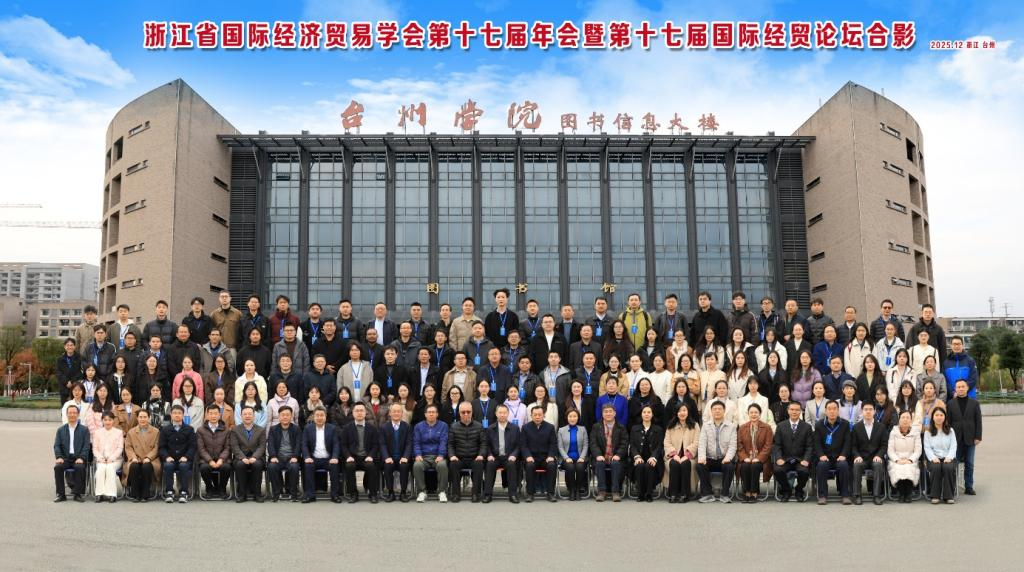
Group Photo of Participants
The conference opened on the morning of December 13 at the International Conference Hall of the Jiaojiang Campus. The opening ceremony featured welcome remarks by Le Chuanyong, President and Deputy Secretary of the CPC TU Committee; Chen Zhicheng, Party Committee Member and Vice Director of the Zhejiang Provincial Department of Commerce; and Professor Ma Shuzhong, President of the Society and Director of the China Digital Trade Research Institute at Zhejiang University. The ceremony was hosted by Duan Wenqi, Dean of the School of Business, TU.
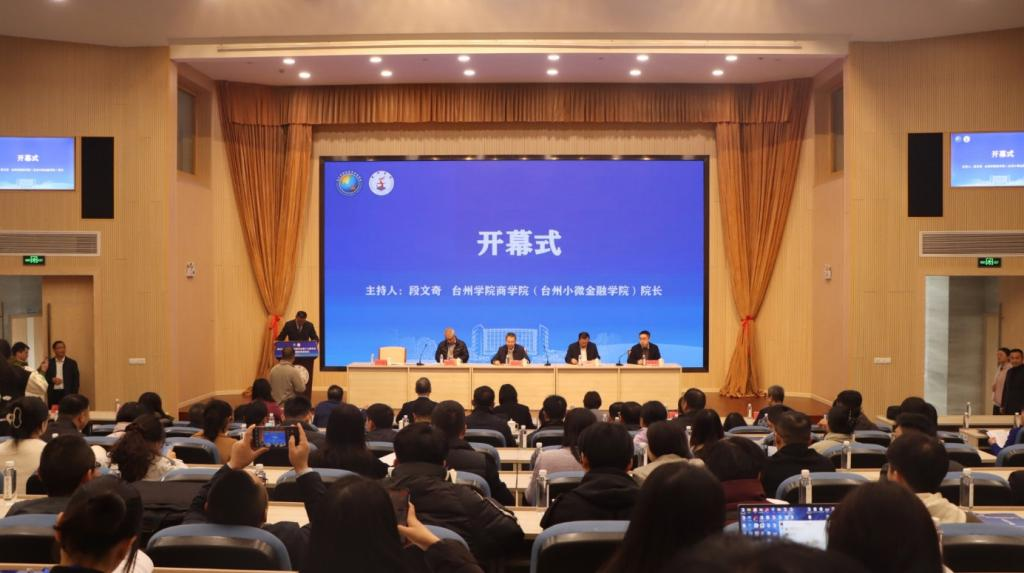
Opening Ceremony of the Forum
Le Chuanyong extended a warm welcome to all the attending guests on behalf of the faculty and students of TU. He emphasized that TU, long adhering to its mission of “rooted in the local area, serving the region”, has been actively implementing the concept of a “community of shared destiny, interests, and efforts” between the university and the local government. In recent years, the university has focused on areas such as institutional openness, digital trade, and industrial upgrading, and has been making extensive efforts to establish applied and open research platforms. The School of Business stands out for its distinctive achievements in cultivating international economics and trade talents and in think tank development. Looking ahead, it will take more pragmatic measures to contribute further intelligence and strength toward building Zhejiang into a high-level open and strong province and supporting the country in constructing a new development pattern.
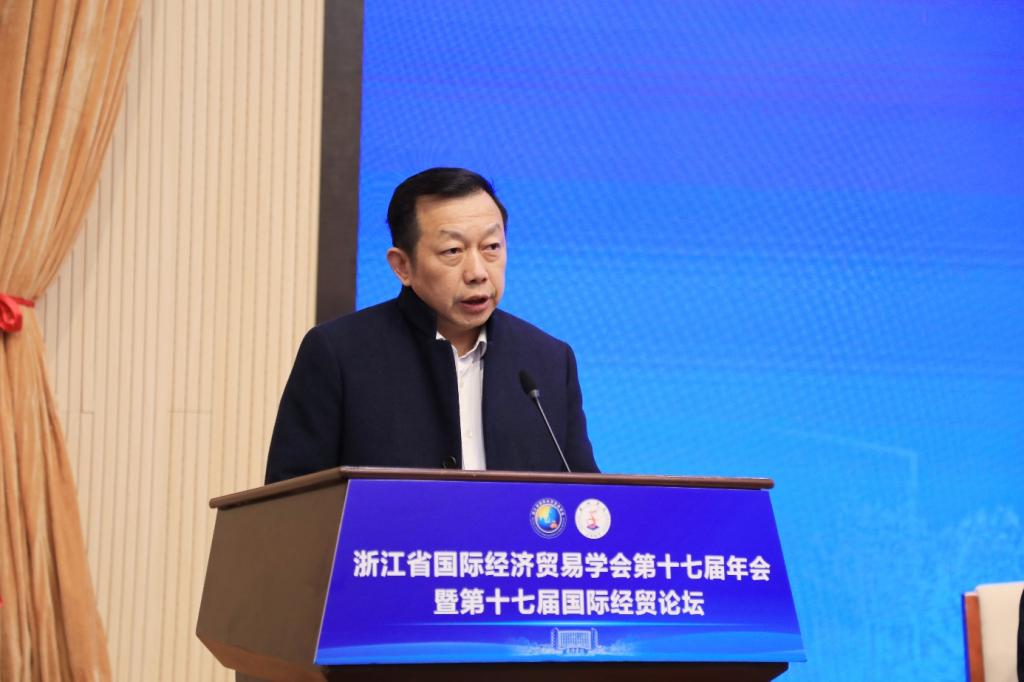
Welcome Address by Le Chuanyong
Chen Zhicheng extended his warm congratulations on the convening of the annual conference on behalf of the Zhejiang Provincial Department of Commerce. He introduced the phased achievements of the provincial commerce system in stabilizing foreign trade, strengthening platforms, and promoting reform in response to the complex and severe challenges of the international economic and trade environment. At the same time, he expressed higher expectations for the Society to further enhance its functions in research translation and decision support, to pool expert wisdom, form a research matrix, and continuously produce high-quality research outputs to better serve the development of an open economy during the “15th Five-Year Plan” period.
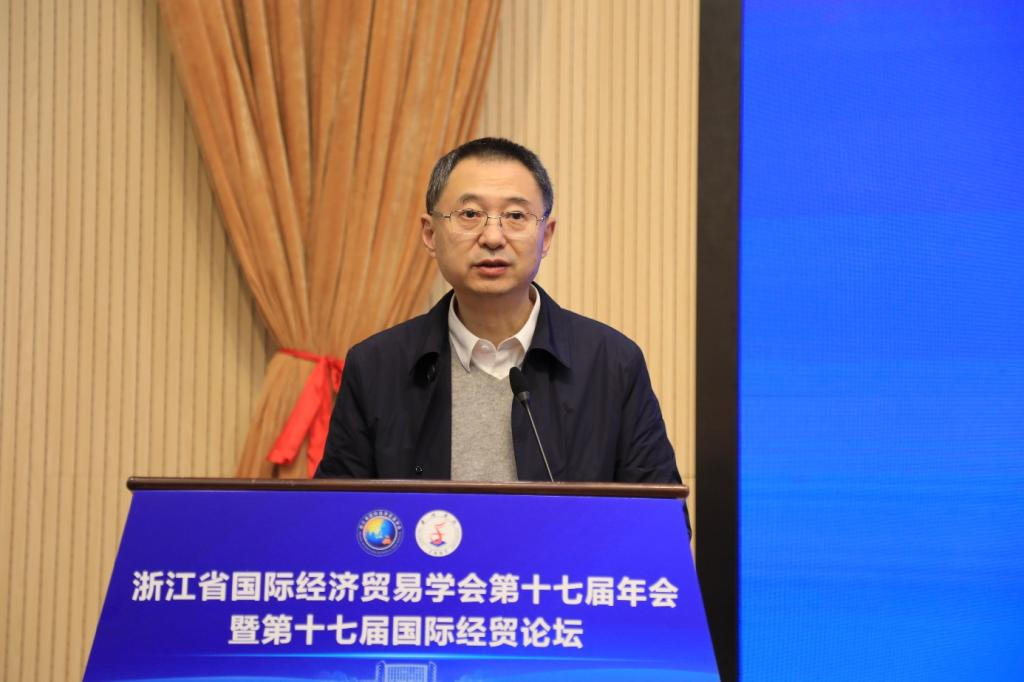
Speech by Chen Zhicheng
In his speech, Ma Shuzhong noted that over the past year, universities in Zhejiang have focused on frontier theories of the open economy and their practical application in the province, continuously advancing in key areas such as digital trade and institutional openness. These efforts have helped build high-level academic exchange platforms and achieved significant results in organizational development. Looking ahead, the Society will continue to pursue a think-tank approach in its development, deepen theoretical research and practical exploration, strengthen academic exchanges and talent cultivation, and better serve government decision-making and the development of member institutions, thereby continuously contributing wisdom and strength to the high-quality development of an open economy in Zhejiang and across the country.
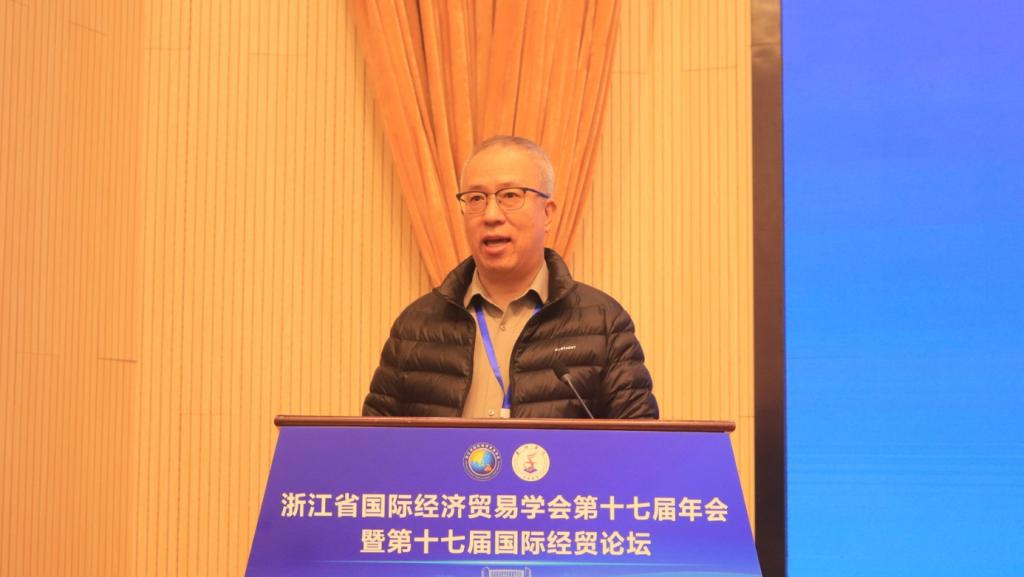
Speech by Ma Shuzhong
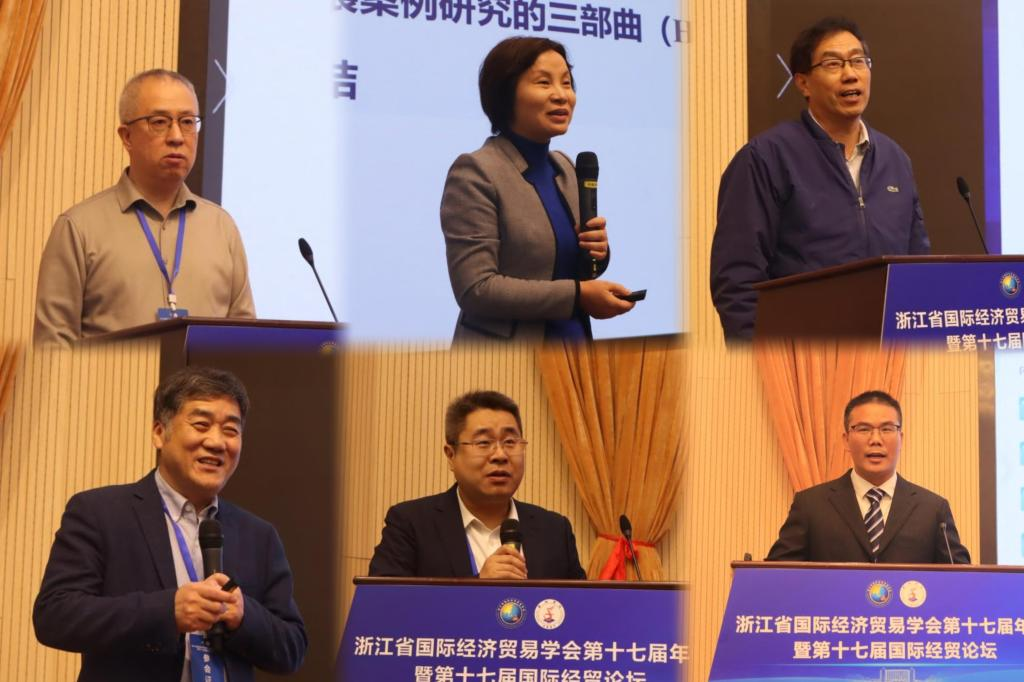
Keynote Speech
After the opening ceremony, Liu Ling, Vice President of the Zhejiang Academy of Commerce Research, presided over the keynote speech session. Ma Shuzhong reviewed the evolution of industrial agglomeration theory from three perspectives: supply-side, demand-side, and supply-demand interactions. He focused on how the overlap of virtual and geographic spaces, changes in platform mechanisms, and shifts in consumer behavior are reshaping the logic of industrial agglomeration in the context of digital trade, and he offered forward-looking insights on future research directions, providing an important reference for building an independent knowledge system of China’s digital trade.
Xiao Jinghua, Executive Vice President of the China Information Economics Society and Professor at the School of Management, Sun Yat-sen University, elaborated on the unique value of case studies in understanding frontier practices, promoting theoretical innovation, and fostering industry–education–research integration. Drawing on examples of Chinese enterprises’ digital transformation, he provided an in-depth explanation of the methodology for high-quality case research, offering clear guidance for enhancing research and teaching in the field of digital economy.
Chen Kunting, Honorary Dean of the School of Economics, Yunnan University of Finance and Economics, analyzed the impact mechanisms of demand constraints, wealth structure differentiation, and industrial evolution on economic growth cycles, based on the long “inverted-V” cycle pattern of industrialized economies. Using theoretical models and dynamic simulations, he provided important support for formulating policy directions to achieve long-term sustainable growth under the context of Chinese-style modernization.
Tian Suhua from Fudan University constructed a market quality measurement indicator based on the mean–variance decomposition of per capita GDP. He conducted an in-depth analysis of regional differences in China’s market quality, international comparisons, and its relationship with high-quality development, providing quantitative tools and policy insights for scientifically assessing market development and advancing the construction of a strong domestic market.
Jiang Wei, Vice President of the Zhejiang Academy of Commerce Research, elaborated on the strategic significance of institutional openness in the service sector and the progress of national comprehensive pilot programs. He proposed specific pathways for Zhejiang to expand service sector openness in key areas such as regulatory alignment, factor flows, and governance restructuring, offering practical guidance for leveraging opportunities as a national pilot area and leading the construction of a high-level open and strong province.
Duan Wenqi focused on the main challenges faced by enterprises in their overseas expansion, such as ineffective partnerships and inefficient collaboration, and demonstrated how AI technologies empower the full process of cross-border trade and investment. He proposed an innovative zero-cost entrepreneurship model through intelligent recommendations, automated processes, and self-evolving decision-making, providing a new paradigm for lowering barriers to overseas expansion and improving the operational efficiency of an open economy.
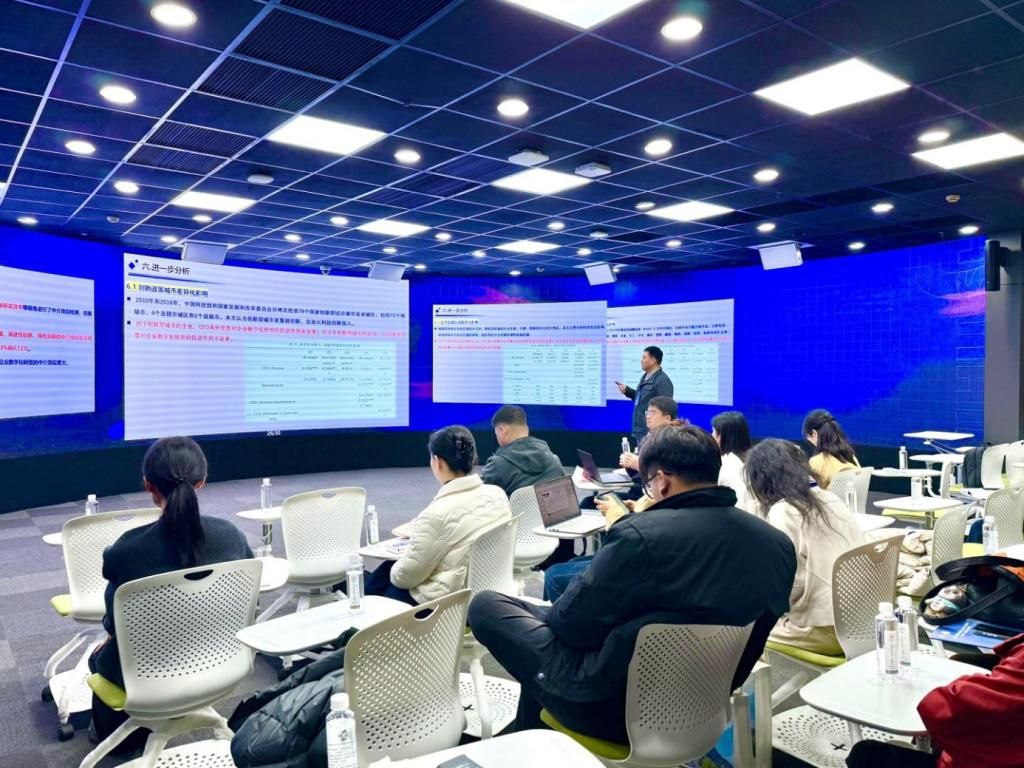
Sub-forums in session
Eleven sub-forums were held simultaneously, covering a wide range of topics, including “Open Innovation and New Advantages in International Competition,” “Reform and Innovative Development of Digital Trade in the Era of Major International Changes,” “Institutional Openness and the Enhancement of Free Trade Pilot Zones,” “Focusing on the 15th Five-Year Plan: Grasping New Situations, Tasks, and Pathways for High-Level Opening-Up,” “Digital Empowerment for High-Level Opening-Up,” “Digital Trade and High-Level Opening-Up,” “Identifying and Responding to New Trends and Opportunities for Private Enterprises Going Global,” “Deepening Sino–African Economic and Trade Cooperation under High-Level Opening-Up,” “New Development Patterns in International Trade of Agricultural and Forestry Products in an Open Economy,” “The Belt and Road Initiative and New Opportunities for International Cooperation,” and the “International Business Education Forum.” Nearly a hundred scholars from universities and research institutions across the province presented their research findings at these sub-forums. The sessions were highly interactive, fostering a lively exchange of ideas and a vibrant academic atmosphere.
In the afternoon, the closing ceremony was held, during which the conveners of the eleven sub-forums presented the outcomes of their discussions in sequence. The session was chaired by Gu Guoda, Director of the Institute of International Economics, Zhejiang University. Shang Hui, Vice Dean of the School of Economics, Zhejiang Gongshang University, delivered an invitation speech on behalf of the organizers of the next annual conference. Ma Shuzhong gave the concluding remarks, highly praising the organization and academic quality of the conference, and officially announced the successful conclusion of the 17th Annual Conference of the Zhejiang Society for International Economics and Trade.
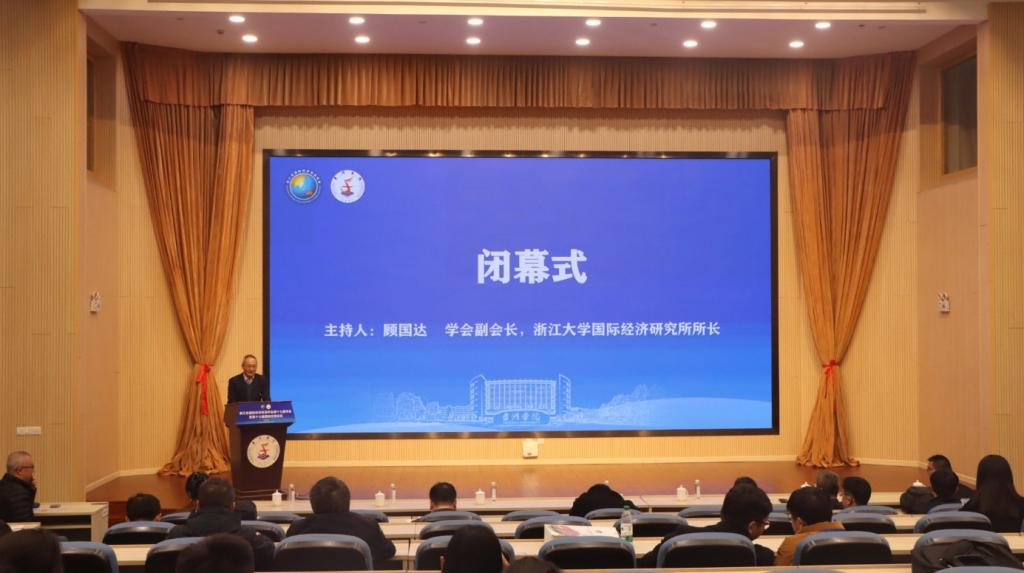
Closing Ceremony of the Forum
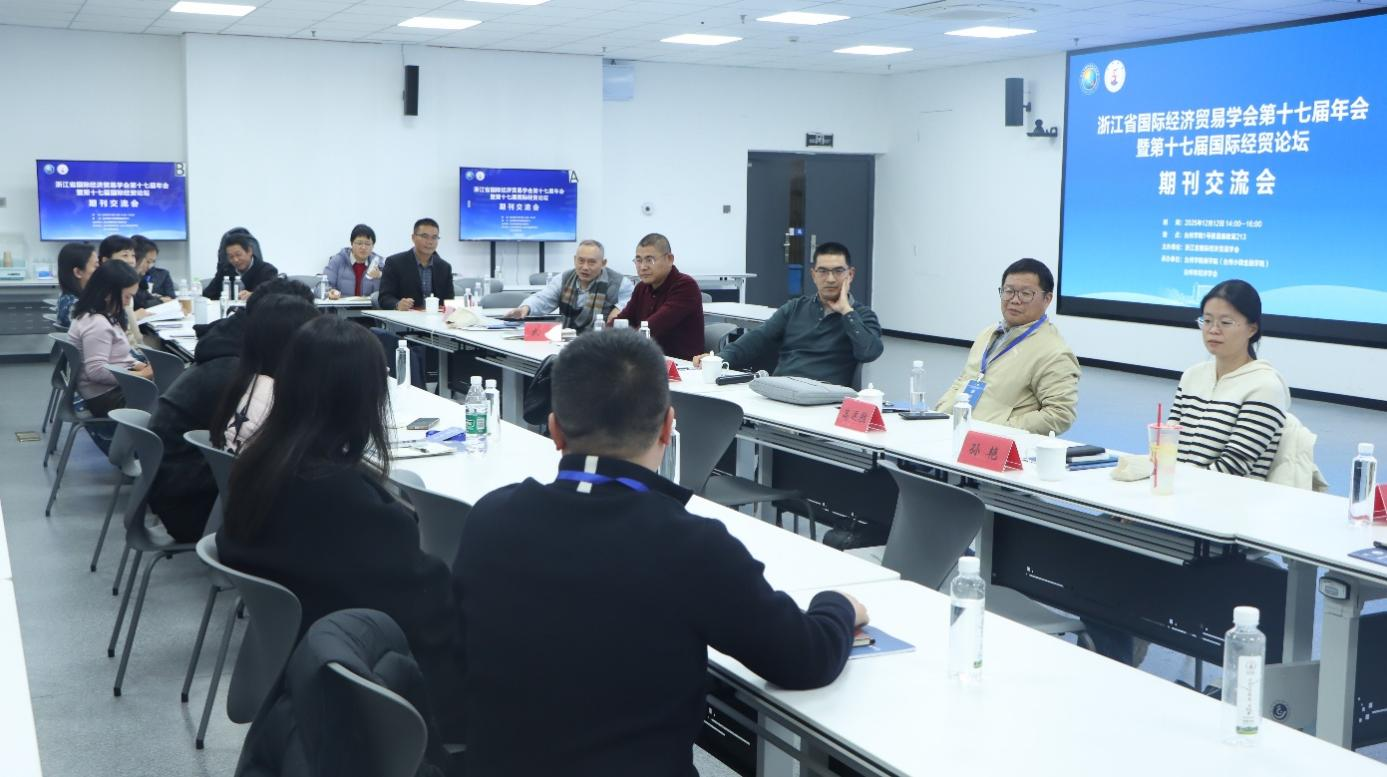
Academic Journal Exchange Session
A journal exchange session was held on the afternoon of December 12 at the conference. The meeting was chaired by Duan Wenqi. Special reports were presented by Yang Qijing, Editor-in-Chief of Economic Theory and Economic Management; Chen Weiguang, Editor-in-Chief of International Economics and Trade Research; Gao Yunsheng, President of the Journal of International Business Research; Wu Qi, Editor of the Journal of International Trade; and Sun Yan, Director of the Editorial Office of Research on Financial and Economic Issues. The exchange session deepened collaboration between academic journals and the scholarly community, offering new perspectives for research in the field of international economics and trade in Zhejiang. It also helped enhance academic influence and policy service capacity, further promoting the high-quality development of the region’s open economy.
The successful organization of this annual conference provided a high-level platform for academic exchange among experts and scholars and offered intellectual support for Zhejiang’s deeper integration into the new development pattern. Taking this opportunity, the university will continue to strengthen discipline and think-tank development, deepen cooperation with domestic and international universities and research institutions, and contribute more wisdom and strength to promoting high-quality development of an open economy.