On April 23, Zhang Juanjuan, lecturer at the Belt and Road Research Centre of Lanzhou University, presented an academic lecture on “Historical Development, Disciplinary Perspectives, and Research Methods in Area Studies” at the invitation of the School of Humanities. The session, hosted by Associate Professor Zhang Chi, was attended by faculty and students from the School of Humanities.
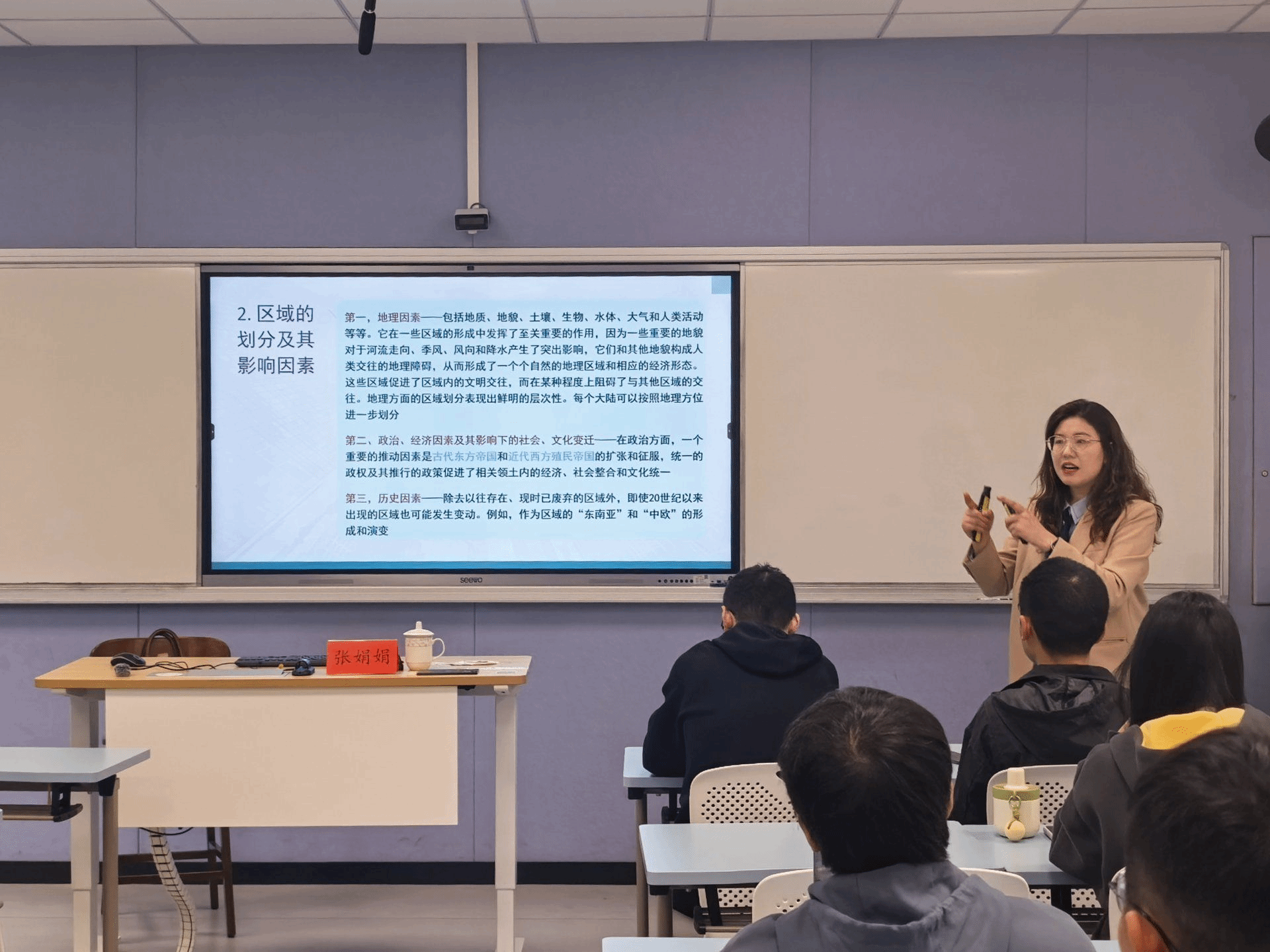
Zhang Juanjuan delivering her lecture
Zhang began by clarifying the disciplinary positioning of area studies. She noted that as an emerging interdisciplinary field established less than four years ago, it overlaps significantly with world history and is characterized by “proximity, distance, and novelty.” The national vision for this discipline is to cultivate professionals who can serve national strategies, providing robust support for strategic consultation and basic research.
She then traced the historical evolution of regions, from ancient tribal alliances through the two world wars, the Cold War, and the post-Cold War era, illustrating how regional concepts are fluid and often shaped by geographical, political, and economic factors. Many regional labels carry historical legacies that invite critical reflection.
On methodology, Zhang emphasized that area studies has not yet developed its own exclusive theoretical framework. Researchers should draw on methods from history, political science, sociology, and other traditional disciplines, while actively incorporating field research, comparative analysis, and emerging tools such as AI and big data. She stressed the importance of interdisciplinary integration and language proficiency.
Zhang also outlined talent development models and career prospects. She described a hybrid, continuous bachelor-master-doctoral training approach that balances theory and practice. Currently, master’s admissions in area studies are moderately competitive, with high first-choice acceptance rates, offering good opportunities for further study. Graduates can pursue careers in civil service, military institutions, and corporate policy advisory roles.
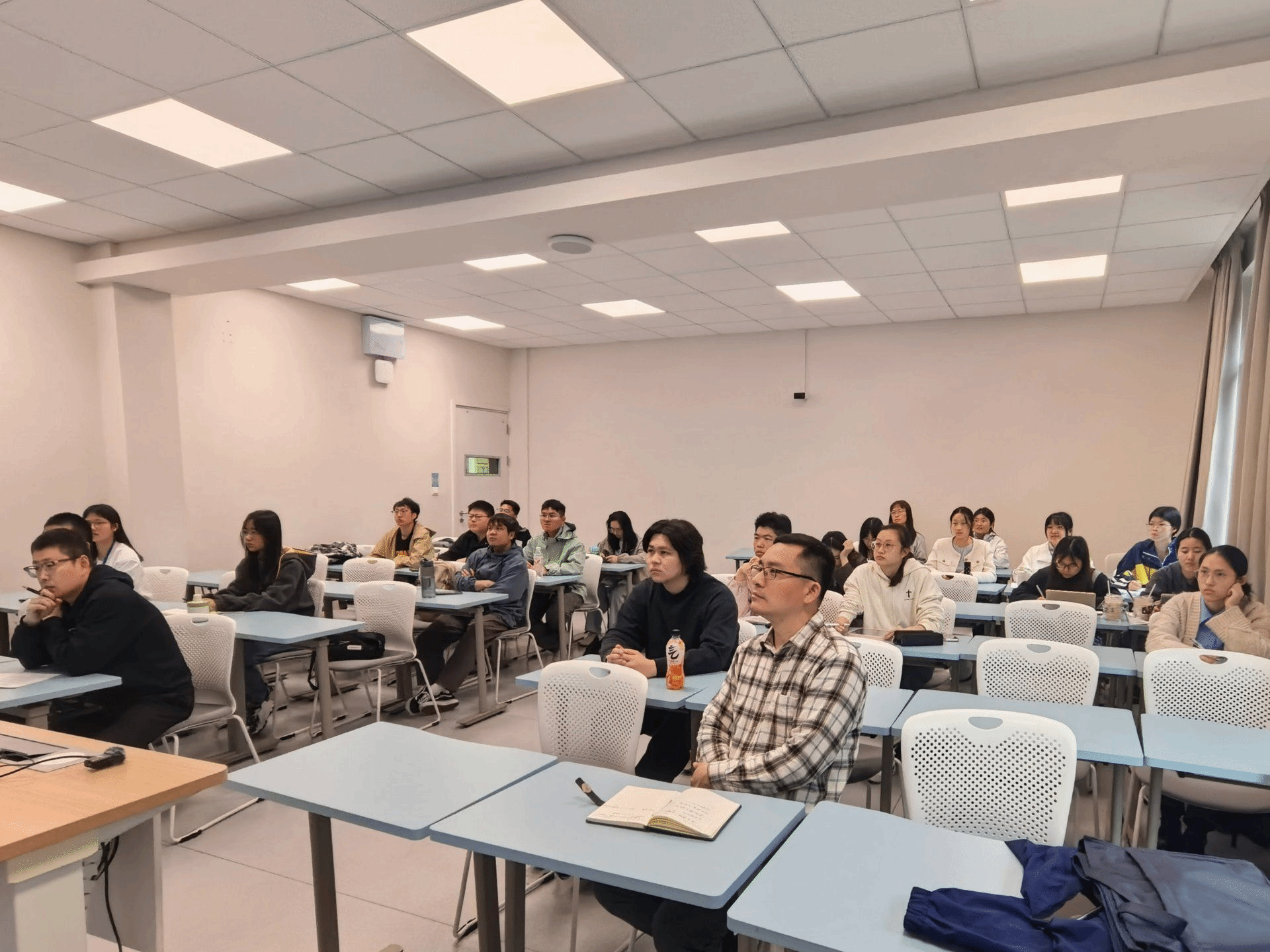
Faculty and students attending the lecture
During the Q&A, Zhang engaged enthusiastically with students on topics such as graduate school choices for Central Asian history, doctoral pathways in modern Japanese economic history, and Egyptology research. She encouraged students to combine personal interests with strengths when choosing research directions. The lecture provided a valuable opportunity for dialogue with cutting-edge scholarship and offered fresh insights for interdisciplinary integration within the School of Humanities.