Dr. Xiong Xianqiang from the School of Pharmaceutical and Chemical Engineering has consecutively published six papers in top-tier journals, including Carbon Energy (IF=24.2), Chinese Journal of Catalysis (IF=17.7), Journal of Materials Science & Technology (IF=14.3), and Science China Materials (IF=7.4). The researches focus on key areas such as heterojunction interface engineering, pollutant degradation mechanisms, and CO2 reduction catalysis. They provide new insights for the design and application of efficient photocatalytic materials. All papers list Dr. Xiong Xianqiang as the corresponding author. Total impact factor of these papers exceeds 100.
By constructing an atomically coherent covalent heterojunction ZnIn2S4/ZnCo2O4, efficient charge separation was achieved through an ultra-low lattice mismatch of 1.64%. Combined with the photothermal effect of ZnCo2O4, near-infrared light response was extended, resulting in excellent performance in photocatalytic hydrogen evolution and selective oxidation of benzyl alcohol. This provides a new paradigm for full-spectrum photocatalytic synergistic conversion. (J. Mater. Sci. Technol., 2026, 251, 135-148).
An S-scheme Mn0.5Cd0.5S/In2S3 heterojunction photocatalyst was designed. Efficient degradation of tetracycline hydrochloride was achieved through optimized interfacial charge transfer. The influence of reaction parameters was elucidated by response surface methodology. Toxicity assessment of degradation products confirmed environmental safety, providing an effective solution for the treatment of emerging pollutants in water bodies. (Chin. J. Catal., 2025, 75, 147-163)
An inverted F-type ZnWO4/In2S3 heterojunction was innovatively designed. By modulating the interfacial electric field, it overcame the charge recombination limitation of traditional Type-I heterojunctions, achieving efficient tetracycline degradation (76% removal rate) and complete detoxification. The developed continuous-flow reaction system demonstrated promising application potential. (Carbon Energy, 2026, DOI:10.1002/cey2.70179).
A donor π-skeleton engineering strategy was proposed to prepare highly crystalline conjugated microporous polymer Py-TDO. Efficient charge transport channels were constructed through intermolecular π-π stacking, enabling a CO2-to-CO conversion rate of 223.97 μmol g-1 h-1 without sacrificial agents. This provides a new pathway for developing metal-free photocatalytic CO2 reduction materials. (Carbon Energy, 2025, 7, e70025).
A lattice-matched ZnIn2S4/ZnCo2S4 heterojunction (lattice mismatch only 0.05%) was developed. Synchronous electron-proton transport was achieved via built-in electric field and hydrogen spillover effect, resulting in a hydrogen evolution rate of 70.3 mmol g-1 h-1 and a benzaldehyde selective oxidation efficiency of 39.3 mmol g-1 h-1 (selectivity 93.6%). This addresses the key bottleneck of asynchronous charge separation and proton transport in photocatalytic reactions. (Sci. China Mater., 2026, DOI:10.1007/s40843-025-3889-6).
A lattice-matched NiCo2S4@Zn0.5Cd0.5S heterojunction was constructed. Ohmic contact was utilized to enhance charge transfer. Combined with the photothermal properties and catalytic activity of NiCo2S4, a hydrogen evolution rate of 92.9 mmol g-1 h-1 and a benzaldehyde selectivity of 96% were achieved. This provides an important reference for the design of synergistic photothermal-photocatalytic conversion systems. (J. Mater. Sci. Technol., 2026, DOI:10.1016/j.jmst.2026.01.003)
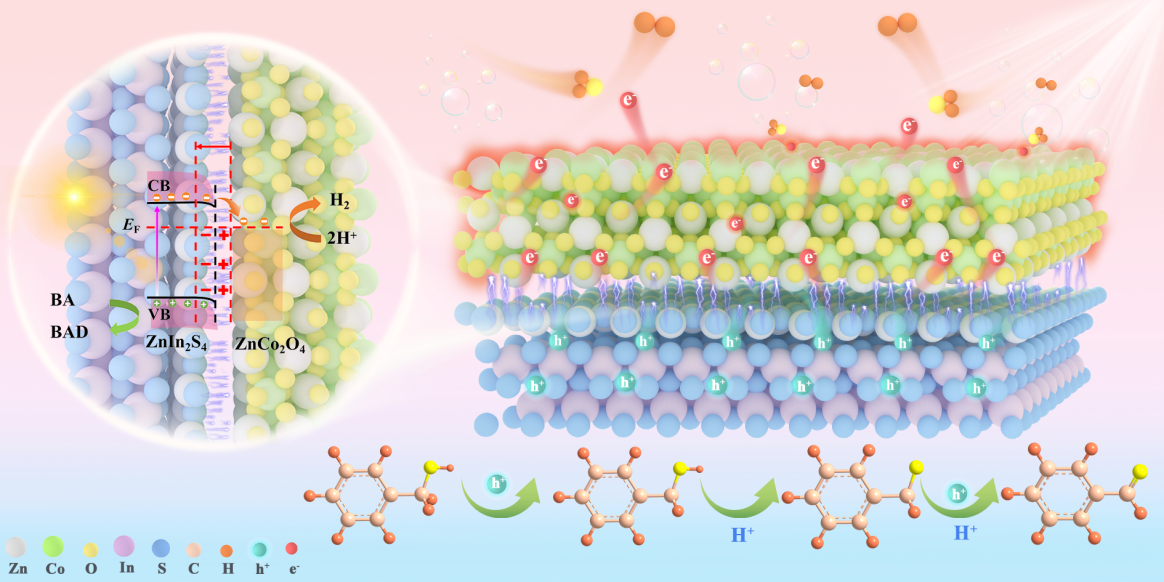
Figure 1 Schematic diagram of heterogeneous photocatalyst construction
Through atomic-level interface regulation, crystal structure optimization, and innovative reaction mechanisms, the series of achievements have significantly enhanced the efficiency, selectivity, and stability of photocatalytic reactions, providing solid theoretical support and practical guidance for technological breakthroughs in fields such as solar energy conversion and environmental remediation.